
By Nolan Mckendry | The Center Square
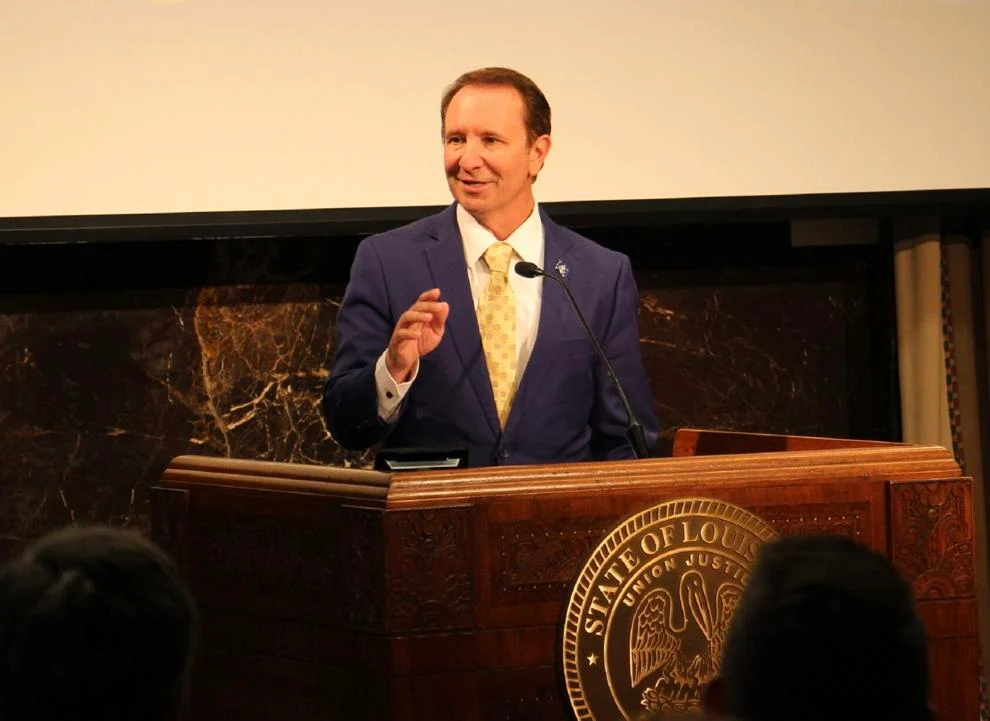
(The Center Square) — Gov. Jeff Landry vetoed $36 million in state funding earmarked for New Orleans projects, the latest flashpoint in an increasingly contentious relationship between the governor and city leaders.
Vetoed line items within the state’s construction budget include $2,000,000 for a new city hall, $16M for Armstrong Park, $1.75 million for an early learning center, $3 million for housing projects through Habitat for Humanity in Jefferson parish, $1 million for the LaSalle Street resilience center, and $6.55 million for an “Integrated Healthcare Hub.”
The veto does not necessarily remove immediately deployable cash.
Most of the funding is tied to Priority 5 bond funding, which is generally lower-priority construction authority for projects meant to be completed in the next 5 years. But it can keep a project in the state pipeline and help provide enough authority to award contracts when paired with other funding.
Mayor Helena Moreno has been adamant about the need for a new city hall. “The current City Hall is not in good condition at all,” she said in an interview with the Times-Picayune.
The city also lost funding through the state’s operating budget.
Landry vetoed more than $6 million in HB1 funding for New Orleans-area projects, cutting appropriations for Covenant House, Behrman Stadium, the Orleans Parish Sheriff’s Office, the Ellis Marsalis Center for Music, Algiers development programs, Operation SPARK and neighborhood development groups in Gentilly and eastern New Orleans.
Lastly, Landry vetoed $423,619 in the supplamental bill, including money for the Algiers Economic Development Foundation, the Mayor’s Office of Cultural Economy, Central City economic development, Dillard University scholarships and Heroes of New Orleans.
“At a time when New Orleans is building real momentum and confidence in our future, it’s deeply disappointing to see so many investments in our city singled out for elimination. More than half of the state’s line-item vetoes impacted New Orleans. These projects represent real improvements for our residents and opportunities to strengthen our economy, public safety and quality of life,” said Mayor Helena Moreno. “We remain strongly committed to be “all in” for a better New Orleans, and we will continue working with every partner possible to restore these investments and keep the progress moving forward.”
The cuts come as Landry and New Orleans have repeatedly clashed over city issues, from policing and homelessness to the courts.
During his first months in office, Landry made New Orleans a central example in his crime agenda, telling lawmakers it was time to “secure the entire city” and backing a permanent State Police troop for New Orleans.
The latest clash came with the 2026 legislative session, when Landry backed several very consequential bills related to the city’s court system. One bill permanently reduced the number of judges on the criminal court from twelve to nine, another reduced the number of judges on the Fourth Circuit Court of Appeal from twelve to ten.
The highest-profile law merged the city’s separate civil and criminal court clerk offices, replacing its longstanding dual-clerk structure.
The New Orleans legislative delegation and Mayor Moreno vehemently opposed the changes.
And when the city devolved into a scramble to fix a budget crisis, Landry made clear that any help would not come without a promise of improved fiscal responsibility.
Of the 13 vetoes, 5 of them target construction in New Orleans. There are also vetoes for projects in Caddo and East Baton Rouge.