
There is a tendency to talk about artificial intelligence as though it suddenly showed up on our doorstep.
It didn’t.
If your email has filtered spam, if your bank has flagged a suspicious transaction, if your phone has predicted the next word in a text message, if Netflix has recommended a show, or if Google Maps has rerouted you around traffic, you have already been using forms of artificial intelligence for years.
What changed with ChatGPT and other generative AI tools was not the arrival of AI. What changed was that we could finally see it, talk to it and interact with it directly.
And now, increasingly, we can see the infrastructure behind it.
That is where the conversation gets more complicated.
Across Northwest Louisiana, the growth of data centers and AI-related investment has created excitement, concern and, in some cases, division. Some see billions of dollars in investment, construction activity, new jobs and the potential for a technology-driven economic transformation. Others see enormous buildings, large power demands, water use and questions about whether the benefits will justify the costs.
I think both sides are asking legitimate questions.
The energy demand is real. Modern data centers require enormous amounts of electricity, especially as artificial intelligence applications demand more computing power. The water issue is real too, particularly in facilities that rely heavily on evaporative cooling.
But I also think the conversation becomes less productive when we assume every data center is the same, every project will use resources in the same way, or every concern automatically means development should stop.
The technology is already changing.
Some companies are relying more heavily on outside-air cooling. Others are using reclaimed water. Newer systems are moving toward closed-loop cooling designs that dramatically reduce or even eliminate ongoing water consumption for cooling.
That does not mean we stop asking questions.
Quite the opposite.
If a company wants to invest billions of dollars in Northwest Louisiana, we should know where its electricity will come from. We should know who is paying for transmission lines, substations and other infrastructure. We should understand how much water will be required, where that water will come from and how it will be managed.
We should also know what the community receives in return.
How many permanent jobs will be created? What kinds of jobs will they be? Will local contractors and suppliers have an opportunity to participate? Will our technical colleges, community colleges and universities be connected to the workforce needs being created? Will local businesses see new customers and new opportunities?
Those are not anti-development questions.
They are responsible-development questions.
The mistake, in my view, would be believing we have only two choices.
One choice is to welcome every project without asking difficult questions.
The other is to reject new technology simply because it creates challenges.
There is a third option.
We can recognize that the AI economy is already here and decide that we are going to build it intelligently.
That point became especially clear to me as we worked on this month’s BIZ cover story.
Amazon’s planned $18 billion investment across Northwest Louisiana is obviously the headline. But the more interesting part of the story may be what is happening around it.
SLB has transformed the former General Motors facility in Shreveport into a major manufacturing operation tied directly to the infrastructure needed for data centers and artificial intelligence. GDIT has built a long-term technology presence in Bossier City. Workforce programs and educational institutions across the region are adapting to the kinds of technical and skilled jobs that increasingly define this economy.
In other words, the AI economy is not something we are waiting on.
It is already taking shape around us.
And that creates an opportunity that goes well beyond a handful of large companies.
Construction firms, electricians, HVAC contractors, engineers, technology companies, logistics providers, security firms, banks, insurance agencies, accountants, attorneys, restaurants, retailers and housing providers can all be affected by what happens next.
The question is whether Northwest Louisiana positions itself to capture that opportunity.
We have spent years talking about economic diversification, retaining young people, creating higher-paying jobs and building industries that can compete in a changing economy.
Now some of that change is arriving faster than many of us expected.
That can be uncomfortable.
Change usually is.
But Northwest Louisiana has always adapted. We have moved through agriculture, energy, manufacturing, health care, defense, cybersecurity and technology. Today, a plant that once produced automobiles is helping build infrastructure for the global AI economy.
That is a remarkable transition.
We should not be afraid to question what comes next. We should not be afraid to demand transparency, infrastructure planning, responsible water use and protections for existing ratepayers.
But we should not be afraid of the opportunity either.
The goal should be growth that strengthens Northwest Louisiana rather than overwhelms it. Growth that creates jobs without sacrificing quality of life. Growth that protects the things that make this region a good place to live, work and raise a family.
Artificial intelligence is not coming.
It is already here.
Now it is up to us to decide what we do with it.
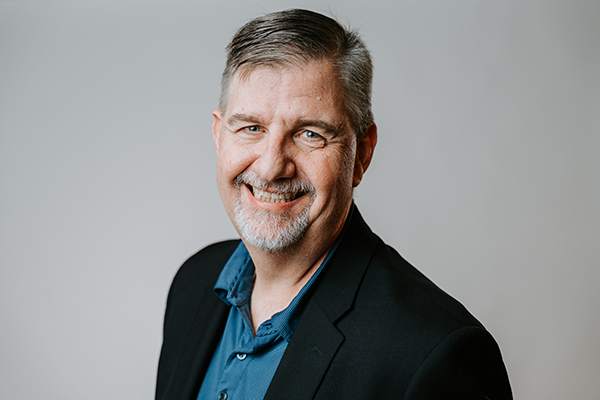
David A. Specht Jr. is publisher and editor of BIZ. and President of Specht Newspapers, Inc.