
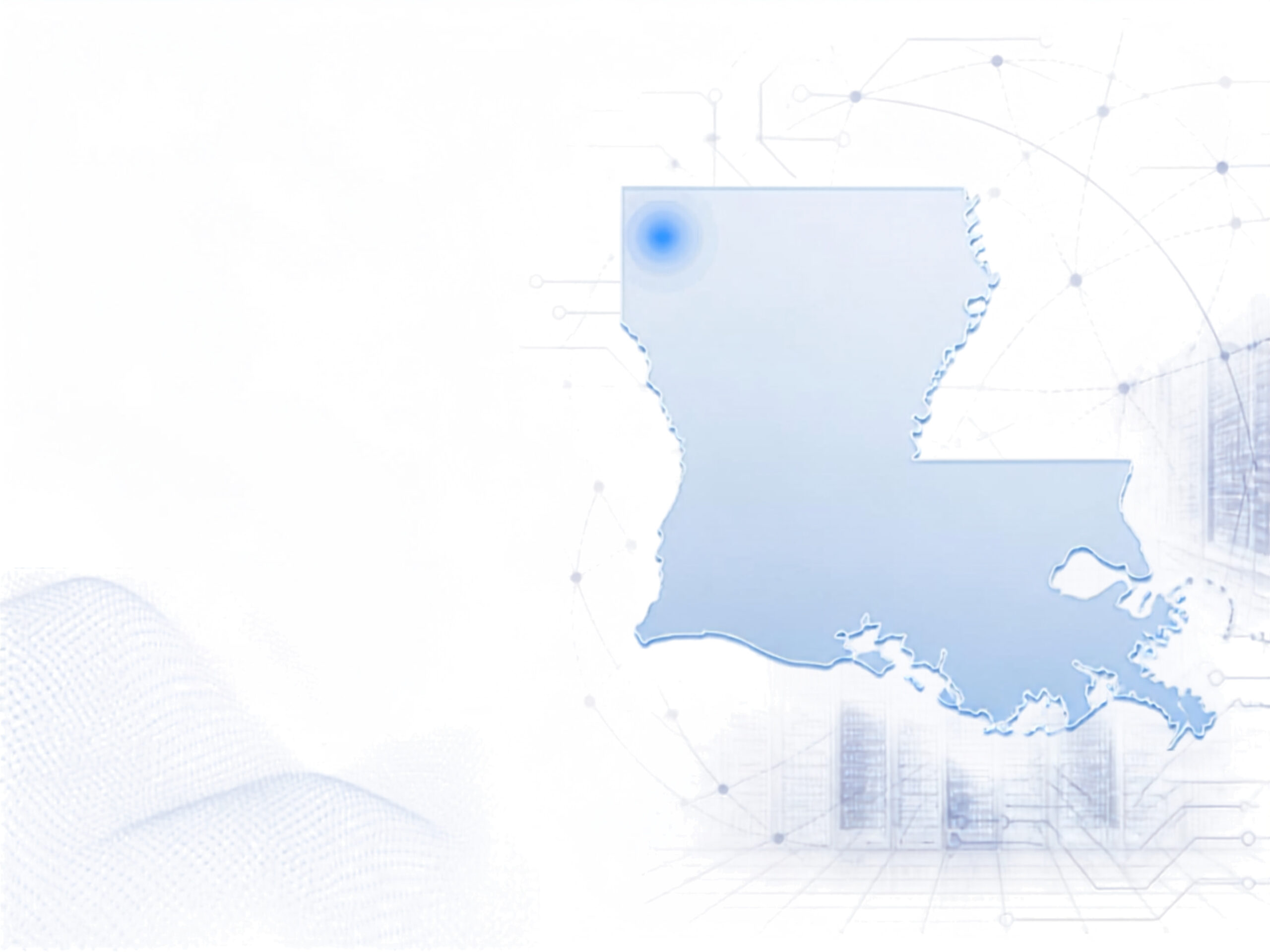
Amazon’s $18 billion investment is reshaping Northwest Louisiana, but the bigger story may be the technology economy beginning to form around it
For years, Northwest Louisiana business leaders have talked about diversifying an economy historically tied to energy, manufacturing, health care, gaming and Barksdale Air Force Base.
Then came an investment with a number difficult to ignore.
In August, Amazon announced it would add another $6 billion to its planned data center development in Northwest Louisiana, bringing the company’s total planned investment to $18 billion. The expansion includes a third campus at Resilient Technology Park in Shreveport and builds on projects already planned in Caddo and Bossier parishes.
Less than six months earlier, Amazon’s announced commitment stood at $12 billion.
Shreveport Mayor Tom Arceneaux described the announcement as potentially the largest capital investment in the city’s history.
“Well, it’s a huge investment,” Arceneaux told KSLA. “It’s the largest capital investment — probably the largest capital investment in Shreveport’s history.”
The additional investment is expected to create 210 direct jobs, bringing the total expected across all three Amazon projects to as many as 750 direct jobs. STACK Infrastructure, which is developing and will own the campuses, estimates construction could support as many as 2,250 jobs.
North Louisiana Economic Partnership President and CEO Justyn Dixon said the impact could extend well beyond the permanent jobs.
“An $18 billion commitment puts into perspective the scale of what is taking shape in Northwest Louisiana,” Dixon said in Amazon’s announcement. “The jobs, construction activity and opportunities for local companies will reach well beyond these three campuses.”
Those numbers alone would make Amazon one of the most consequential economic development stories in Northwest Louisiana in decades.
The region is not simply becoming a place where data centers are located. Shreveport is already home to a major manufacturing operation supplying the infrastructure used to build the global data center economy.
But focusing only on Amazon may miss the larger story.
Across Shreveport-Bossier, pieces of an emerging technology and artificial intelligence infrastructure economy are beginning to connect. Data centers are being developed. An existing Shreveport manufacturer is rapidly expanding its role in the global infrastructure needed to build them. A longtime Bossier City technology operation is committing to another decade in the region. Colleges and workforce organizations are expanding programs aimed at supplying the workers those industries will need.
Taken together, the developments raise a larger question for Northwest Louisiana:
What happens if the $18 billion Amazon investment is not the culmination of the region’s technology strategy, but the beginning of its next phase?
More Than Server Buildings
The massive buildings commonly called data centers are the physical backbone of an increasingly digital economy.
Cloud computing, streaming, business applications and artificial intelligence ultimately depend on physical equipment housed somewhere. As AI applications require greater computing power, companies are investing heavily in the infrastructure necessary to provide it.
Louisiana has moved aggressively into that competition.
In addition to Amazon’s Northwest Louisiana projects, Meta has committed more than $50 billion to its massive Richland Parish data center development. Louisiana Economic Development has also announced a $3.6 billion Applied Digital AI campus in Rapides Parish, while other large-scale projects are under development elsewhere in the state.
Amazon’s investment puts Shreveport-Bossier squarely within that larger movement.
According to Amazon, its three planned Northwest Louisiana campuses are expected to create up to 750 full-time data center jobs while supporting approximately 2,500 additional positions in the surrounding economy.
The jobs required to operate and support the facilities extend beyond computer programmers. Amazon has identified electricians, HVAC technicians, project engineers, network specialists, operations managers and security specialists among the occupations expected to be needed.
And that is where the potential economic impact begins to extend beyond the walls of the data centers themselves.
Shreveport Is Already Building the AI Economy
One of the most striking examples can be found inside a facility that once represented a very different chapter in Shreveport’s economy.
For decades, workers at the former General Motors plant manufactured vehicles.
Today, workers at that same site are manufacturing infrastructure for data centers.
SLB began establishing its Shreveport data center infrastructure operation in 2023 and began manufacturing there in 2024. According to the company, the operation has since expanded to occupy 3.1 million square feet and employs nearly 1,800 people.
Inside the Shreveport operation, SLB manufactures prefabricated modular infrastructure used in data centers. Rather than constructing every component at a data center site, systems can be engineered and assembled in a controlled manufacturing environment and then transported for installation.
According to SLB, that approach allows manufacturing and site preparation to occur simultaneously and can reduce the time needed to bring new data center capacity online.
Since April 2024, the company says it has shipped more than 1.3 gigawatts of prefabricated modular infrastructure and expects cumulative deliveries to exceed 2 gigawatts globally by the end of 2026.
The Shreveport operation is also tied directly to the growth of artificial intelligence infrastructure.
In March, NVIDIA selected SLB as a modular design partner for NVIDIA DSX AI factories, according to SLB. The company has also been selected by Meta to support a major data center project in Canada.
Then came another significant development on Aug. 31.
SLB announced an agreement to acquire Kelvion, a global provider of thermal management and heat exchange technologies, in a transaction involving approximately $3.4 billion in cash and the assumption of about $700 million in debt.
Cooling has become increasingly important as AI workloads increase the amount of power consumed and heat generated inside data centers.
According to SLB, data centers are already Kelvion’s largest and fastest-growing market, with the company expected to generate between $1.2 billion and $1.3 billion in data center revenue in 2026.
SLB expects its combined data center business with Kelvion to generate more than $2 billion in pro forma revenue in 2026 and is targeting $4.5 billion to $5 billion in revenue by 2028.
“AI is driving the most significant infrastructure investment cycle in our lifetime,” SLB CEO Olivier Le Peuch said in announcing the acquisition.
For Northwest Louisiana, the significance is difficult to overlook.
The region is not simply becoming a place where data centers are located. Shreveport is already home to a major manufacturing operation supplying the infrastructure used to build the global data center economy.
That creates the possibility of something more valuable than a single economic development project: an industry cluster.
A Foundation Years in the Making
The technology economy taking shape in Northwest Louisiana did not begin with Amazon.
In Bossier City, the Cyber Innovation Center and National Cyber Research Park have spent years working to establish the region as a destination for cybersecurity, technology and knowledge-based jobs.
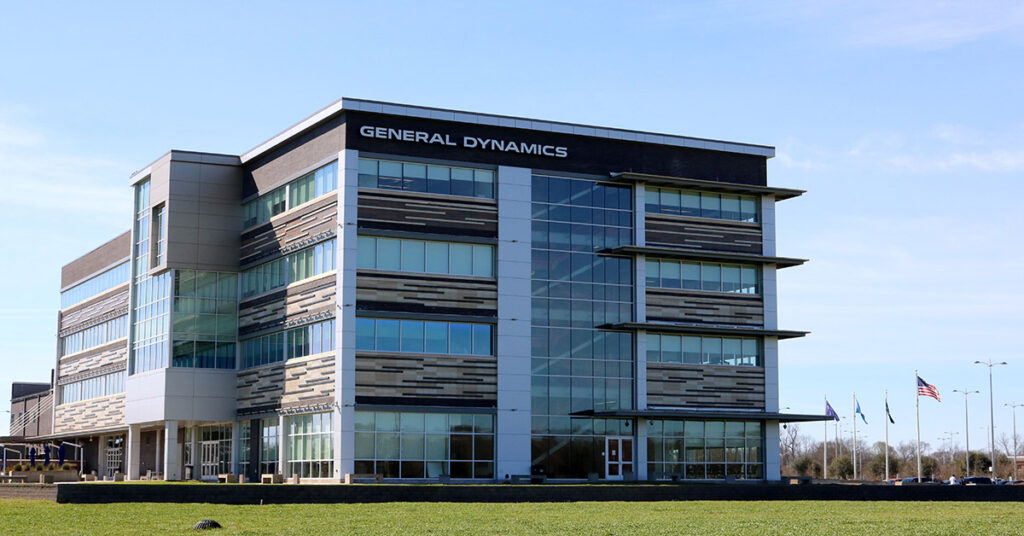
One of the most visible results of that effort has been General Dynamics Information Technology.
GDIT began its Louisiana partnership in 2015 and operates its Integrated Technology Center in Bossier City. In August, the company announced a new lease agreement with the Cyber Innovation Center that could extend its presence at the facility for another 10 years.
The center supports work in cybersecurity, artificial intelligence and software development.
According to a 2024 study by Louisiana Tech University’s Center for Economic Research cited by GDIT, the company’s Louisiana operation generates an estimated $358 million in annual economic impact through employment, supply-chain activity and consumer spending.
The company did not announce additional jobs as part of the new agreement, but its decision to potentially remain another decade gives the region something important as it attempts to build a larger technology economy: an established base.
The challenge for Northwest Louisiana may increasingly become less about creating jobs and more about creating enough qualified workers to fill them.
The combination is notable.
GDIT represents the software, cybersecurity and technology-services side of the economy. SLB represents advanced manufacturing and physical infrastructure. Amazon represents enormous demand for computing capacity.
They are different businesses, but increasingly they occupy parts of the same economic landscape.
Who Will Do the Work?
Billions of dollars in investment do not automatically translate into local prosperity.
People have to be able to fill the jobs.
That makes workforce development one of the most important pieces of Northwest Louisiana’s opportunity.
Amazon has said it plans to work with educational institutions, technical colleges and community organizations on workforce development associated with its campuses.
Amazon Web Services Vice President of Economic Development Roger Wehner reinforced that point during the company’s August public outreach in Shreveport.
According to the Louisiana Radio Network, Wehner said Amazon is “super-committed to building our contractor and vendor base locally, as well as our workforce locally.”
He also said many data center positions do not necessarily require a four-year degree and that an associate degree can qualify applicants for numerous jobs.
Meanwhile, programs already operating in the region are attempting to shorten the distance between residents and available industrial careers.
The North Louisiana Economic Partnership’s EMPWR LA program recently received a Bronze Award for Excellence in Economic Development from the International Economic Development Council.
The six-week workforce program was developed with industry input and prepares participants for entry-level positions in advanced manufacturing, industrial production, distribution and skilled trades.
Bossier Parish Community College and Northwest Louisiana Technical Community College are among the institutions involved in EMPWR LA training.
NLTCC is also making a substantial investment in its physical capacity. The college announced in August approximately $30 million in planned improvements to its Shreveport campus through an initiative called Rebuild to Rise. The project is intended to position the campus for future growth and workforce training needs.
These efforts take on greater importance as employers compete for electricians, HVAC technicians, engineers, industrial maintenance workers, network specialists and other skilled employees.
The challenge for Northwest Louisiana may increasingly become less about creating jobs and more about creating enough qualified workers to fill them.
Growth Has a Cost
The scale of the opportunity does not eliminate legitimate questions about the impact of data centers.
In Bossier Parish, a public hearing over the planned Highway 3 Technology Park near Benton lasted more than two hours earlier this year as residents questioned water consumption, noise, environmental impacts, infrastructure demands and the transparency surrounding the development.
The planned campus encompasses more than 1,000 acres and is expected to include approximately 1.3 million square feet of data center facilities and supporting infrastructure.
Project representatives said the Benton facility is expected to use approximately 57 million gallons of water annually. Developers are expected to fund pipelines needed to supply the property, while industrial cooling water will be treated according to environmental requirements.
Electricity is another significant issue.
Data centers require enormous amounts of power, creating questions nationally about grid capacity and whether residential and existing business customers could ultimately bear some of the costs of infrastructure expansion.
SWEPCO President and Chief Operating Officer Brett Mattison has argued that additional large customers can ultimately benefit the broader system.
“When more companies invest here, the cost of the electric system is shared more widely, contributing to long-term rate stability for all customers,” Mattison said in a SWEPCO announcement following Amazon’s original Northwest Louisiana investment.
When Amazon expanded its commitment to $18 billion in August, Mattison reiterated that position, saying “growth should pay for growth.”
Amazon says it will pay 100% of the costs associated with new energy infrastructure and grid upgrades needed for its data centers.
The company has also announced plans to spend up to $400 million on public water infrastructure associated with its three campuses.
Amazon says its facilities will rely primarily on air cooling, using water for cooling when temperatures exceed approximately 85 degrees. The company estimates those conditions occur less than 13% of the year locally.
The questions are not unique to Northwest Louisiana.
In June, Gov. Jeff Landry established the Louisiana Ratepayer and Community Protection Initiative as the state experienced a surge of large-scale data center and industrial investment.
According to Louisiana Economic Development, the framework is intended to require qualifying projects to protect existing ratepayers, invest in grid reliability, support workforce development, contribute to local tax bases and use natural resources responsibly.
Amazon is participating in Louisiana’s Data Center Sales and Use Tax Exemption, making the long-term economic return on these projects an important issue for state and local governments as well as residents.
The ultimate measure will not simply be how many billions of dollars companies invest. It will be how much lasting economic activity those investments create.
Outside the Gates
That may be where the greatest opportunity lies.
A data center employs people directly, but a technology cluster can support companies that never operate a server.
Construction companies build the facilities. Electricians wire them. Mechanical contractors install systems. Engineers design infrastructure. Manufacturers supply components. Security companies protect the sites. Trucking and logistics companies move equipment. Restaurants, retailers and housing providers serve workers. Accountants, attorneys, banks and insurance companies serve the businesses that follow.
That secondary activity is precisely what regional economic development officials say they are watching.
Dixon told KSLA that the construction phase alone could create significant economic activity over several years.
“When we’re looking at a 3 to 5-year buildout, when you have 22 hundred people doing construction, that’s a lot of tax dollars turning over in Shreveport and Caddo Parish,” Dixon said.
Arceneaux has similarly emphasized the potential impact beyond Amazon itself.
“Amazon and STACK Infrastructure’s continued investment in Northwest Louisiana is a tremendous vote of confidence in Shreveport and in the people who call this region home,” the mayor said in Amazon’s August announcement. “This means more jobs, more opportunity for local businesses, and another major step forward for our economy.”
It is no longer simply whether Northwest Louisiana can participate in the technology economy. Increasingly, it is what Northwest Louisiana will do with the opportunity now arriving at its doorstep.
Whether those opportunities materialize as broadly as projected will take years to determine.
But SLB’s Shreveport growth demonstrates how broad a technology infrastructure ecosystem can become.
A manufacturing facility occupying the former General Motors plant is now producing modular infrastructure for AI and cloud-computing projects around the world. That work did not exist in Shreveport a few years ago.
Today it employs nearly 1,800 people.
Amazon’s Northwest Louisiana investment has not yet had time to produce the same kind of secondary effects. Its original $12 billion commitment was announced only in February.
The expansion to $18 billion came less than six months later.
That speed is part of what makes the moment unusual.
The Next Question
For decades, economic development discussions in Northwest Louisiana have often centered on what the region needs to attract.
A major employer.
A new industry.
Higher-paying jobs.
Young professionals.
Investment.
Technology.
Much of that conversation will continue. No single project, even one measured in tens of billions of dollars, solves a region’s economic challenges.
But Northwest Louisiana enters September 2026 with a different set of facts than it had at the beginning of the year.
Amazon plans to invest $18 billion across three data center campuses.
SLB has transformed the former GM plant into a 3.1 million-square-foot manufacturing center tied directly to the global expansion of AI infrastructure.
GDIT has committed to potentially another decade in Bossier City.
Workforce programs and educational institutions are expanding their efforts to prepare people for advanced manufacturing, skilled trades and technology careers.
The infrastructure needed to support all of that is being built around them.
There are legitimate questions still to answer about utilities, incentives, workforce availability, environmental impacts and how broadly the economic benefits will ultimately spread.
Those questions should be asked.
But the larger question for the business community may have changed.
It is no longer simply whether Northwest Louisiana can participate in the technology economy.
Increasingly, it is what Northwest Louisiana will do with the opportunity now arriving at its doorstep.
— BIZ Magazine