
Editor’s note: This is the first in a BIZ Magazine series examining economist Loren Scott’s 2027-28 forecast for Northwest Louisiana, the projects driving the outlook and the challenges that could shape whether the region realizes that growth.
SHREVEPORT-BOSSIER, La. — After years of uneven employment growth, the Shreveport-Bossier economy could be entering one of its strongest periods of job creation in years, with economist Loren Scott forecasting 4,800 new jobs across the region over the next two years.
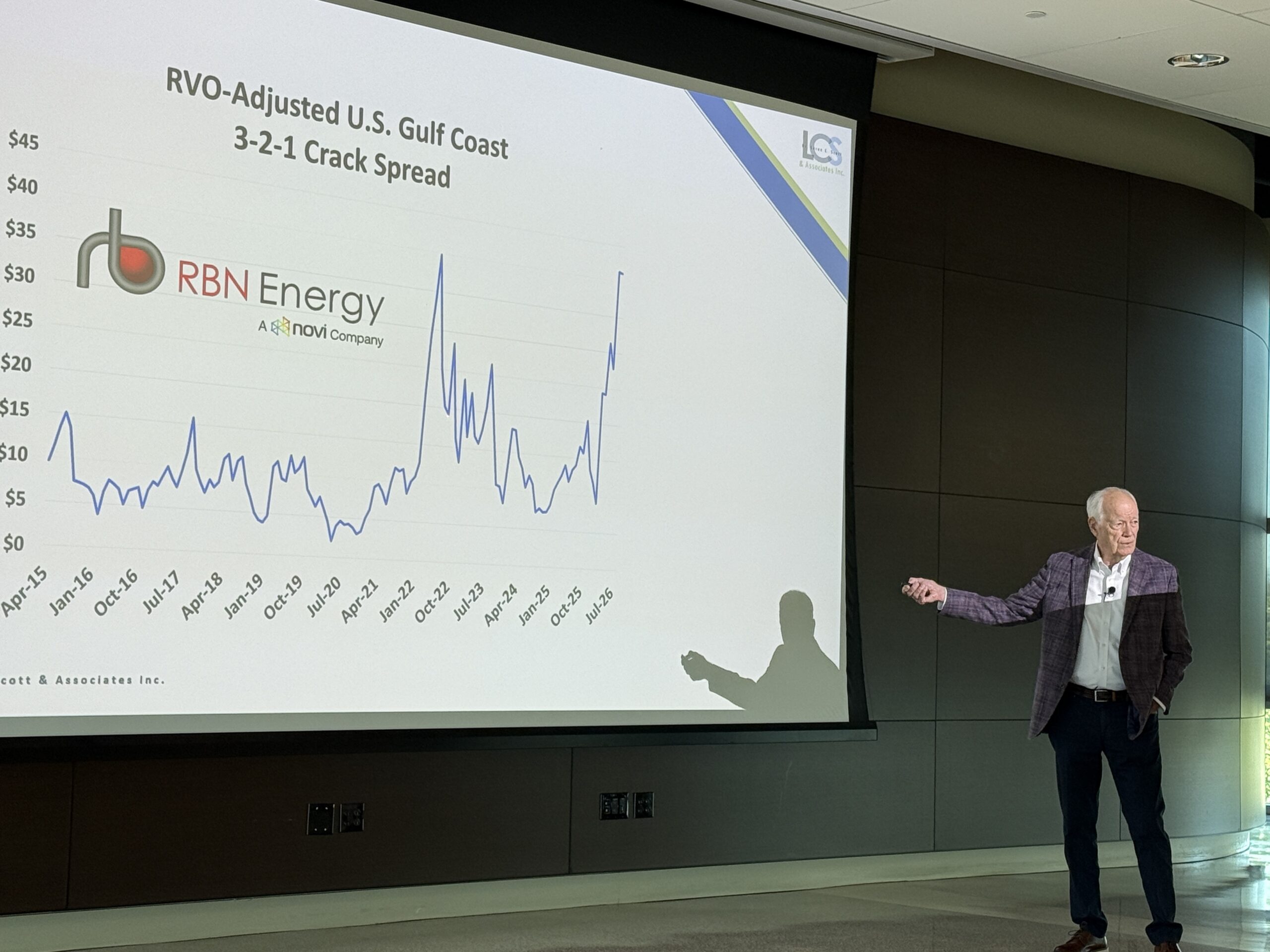
Scott presented his Louisiana Economic Forecast: State and MSAs 2027 and 2028 Friday at the Port of Caddo-Bossier, projecting the three-parish Shreveport-Bossier metropolitan area will add 2,500 jobs in 2027 and another 2,300 in 2028.
That would represent employment growth of 1.5% next year and 1.3% in 2028, bringing the region from an estimated 171,600 nonfarm jobs in 2026 to approximately 176,400 by the end of the forecast period.
Scott made clear during Friday’s presentation that he sees the outlook as more than incremental growth.
“We need to give an award up here to Amazon because, oh my gosh, the amount of money being pumped in here is creating more growth for you,” Scott told the audience. “It is really great.”
Amazon has increased its planned investment in Northwest Louisiana data centers to $18 billion across three campuses in Caddo and Bossier parishes. The company says the campuses are expected to create up to 750 full-time data center jobs while supporting thousands of additional positions through construction and the broader economy.
Amazon’s presence in the region extends beyond the planned data centers. Its Shreveport robotics fulfillment center, which opened in 2024, employs more than 2,000 people.
Another major contributor is SLB, which has transformed the former General Motors manufacturing complex in Shreveport into a production hub for prefabricated data center infrastructure.
SLB reported in August that its Shreveport operation had expanded to 3.1 million square feet and nearly 1,800 employees since operations began at the site. The company manufactures modular infrastructure used in large-scale data centers serving the rapidly expanding artificial intelligence and cloud-computing markets.
“All these huge, great numbers and great investment numbers coming into this area,” Scott said as he outlined the Amazon and SLB developments.
Scott also sees growth coming from more established pillars of the regional economy.
Companies operating at the Port of Caddo-Bossier employ approximately 2,267 people, up about 120 from a year earlier, according to the forecast. Scott projects employment among Port companies will reach approximately 2,392 by 2028, with about $80 million in capital expansion projects planned over the next two years.
The Cyber Research Park in Bossier City, Barksdale Air Force Base and renewed activity in the Haynesville Shale also figure into Scott’s outlook.
Barksdale remains one of the region’s largest employers, with 9,335 military and civilian personnel. After years of declining employment, the base has added approximately 330 jobs over the past two years, according to Scott’s report.
The forecast also anticipates stronger Haynesville Shale activity as natural gas demand grows from Gulf Coast liquefied natural gas export facilities and electricity generation associated with the expansion of data centers.
But Scott cautioned that the official employment numbers may not capture all of the economic activity occurring during the region’s construction boom.
Workers building data centers and other major projects in Northwest Louisiana may work for contractors headquartered elsewhere in Louisiana. That can cause those jobs to be counted outside Shreveport-Bossier even though the workers are staying in local hotels, eating at local restaurants and spending money throughout the region.
“It may not show up, but here’s how you’re going to know,” Scott said. “Look at your sales taxes.”
The projected 4,800-job gain would rank Shreveport-Bossier fifth among Louisiana’s 10 metropolitan areas in the number of jobs added over the two-year period.
It would also represent a significant change from an economy that has spent much of the past decade replacing lost jobs rather than generating sustained employment growth.
Even if Scott’s projections are realized, however, Shreveport-Bossier employment would remain below its 2008 peak.
The forecast is not a guarantee. It depends on major projects moving forward as anticipated, employers following through on hiring plans and the national economy avoiding a significant downturn.
Scott’s outlook assumes relatively modest U.S. economic growth over the next two years, with real gross domestic product increasing 2.2% in 2027 and 2.3% in 2028.
Yet he sees something happening across northern Louisiana that has been largely absent for years.
“For the first time, in probably two decades, we’ve seen great growth going on north of I-10,” Scott said, pointing to developments in Shreveport, Monroe and Alexandria.
For Shreveport-Bossier, that changes the economic question.
After years of asking where the next major employers would come from, Northwest Louisiana now has billions of dollars in announced investment, expanding manufacturers and several major projects moving through development.
The question increasingly becomes whether the region has the workforce, infrastructure and population growth necessary to capitalize on them.
Coming next: BIZ Magazine examines the projects beyond the headline numbers that could reshape Northwest Louisiana’s economy — and which ones appear most likely to become reality.