
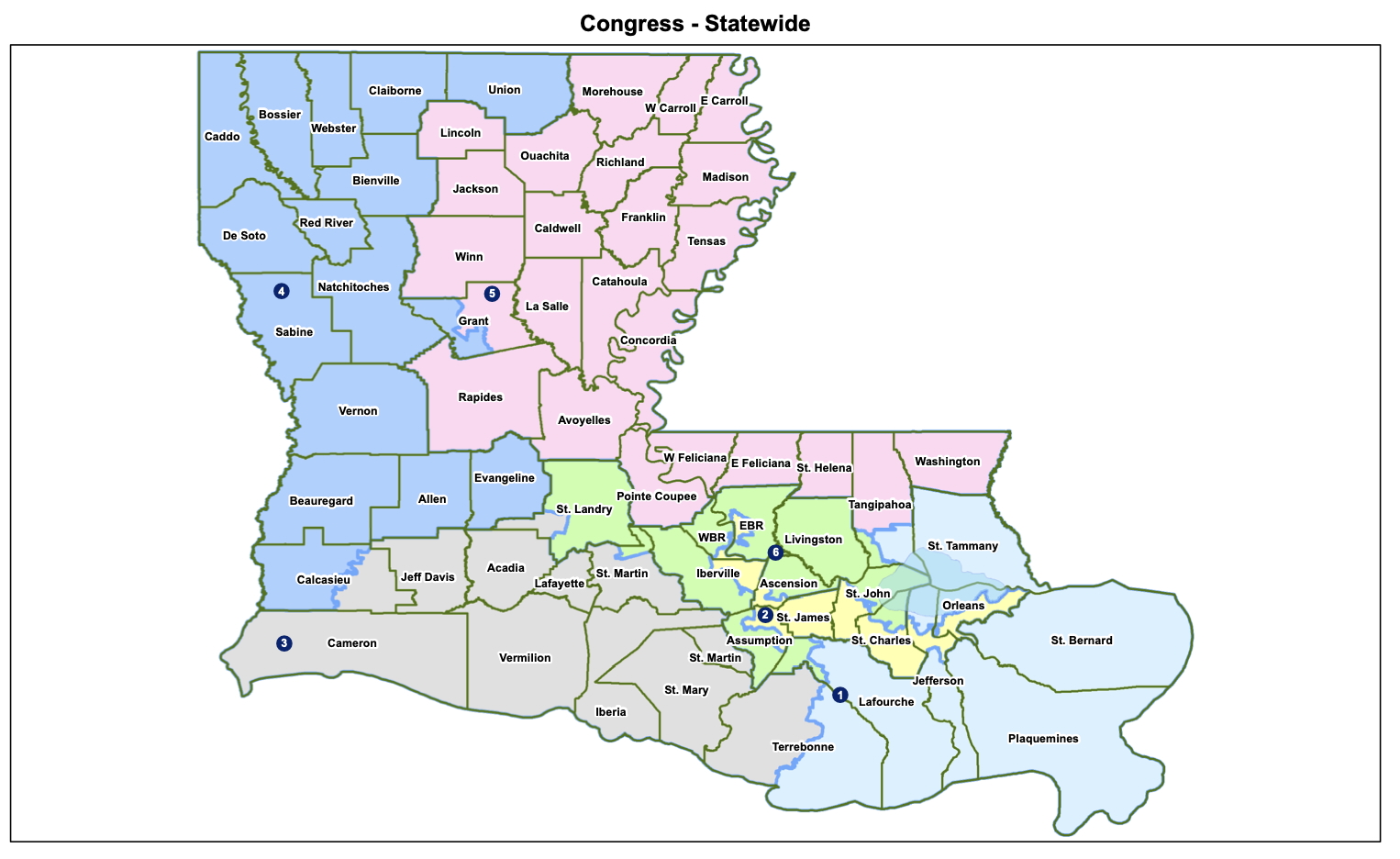
BATON ROUGE, La. — The Public Affairs Research Council of Louisiana is urging state officials to fund a major voter education campaign following the rescheduling of Louisiana’s congressional elections amid continuing legal disputes over the state’s U.S. House district map.
In a commentary released May 20, PAR said Louisiana voters now face a confusing election cycle after the state postponed elections for its six U.S. House seats and shifted the races to the Nov. 3 ballot under the state’s traditional open primary system.
Under the revised election schedule, all candidates will appear on the same ballot regardless of party affiliation, with a Dec. 12 runoff scheduled if no candidate receives more than 50% of the vote.
The elections were delayed after the U.S. Supreme Court ruled Louisiana’s latest congressional map unconstitutional in April, creating uncertainty over district boundaries ahead of the election cycle.
PAR said the combination of delayed elections, changing district lines and the rollout of closed party primaries for some offices could leave many voters confused.
“The Public Affairs Research Council of Louisiana strongly urges the governor, lawmakers and the Secretary of State’s Office to set aside money for an extensive outreach campaign to educate voters about the ballot changes and the district changes that will be enacted,” the organization wrote in the commentary.
According to the report, more than 40,000 absentee ballots had already been cast before Gov. Jeff Landry suspended the congressional elections while allowing other scheduled elections to proceed.
The commentary also outlines the ongoing redistricting battle that began after the 2020 Census, including multiple legislative sessions, federal court rulings and competing proposals over the creation of a second majority-Black congressional district.
PAR said lawmakers are continuing to debate a revised congressional map during the current legislative session and warned that voters could struggle to navigate the changes without additional public outreach.
The full commentary is available from PAR Louisiana.