
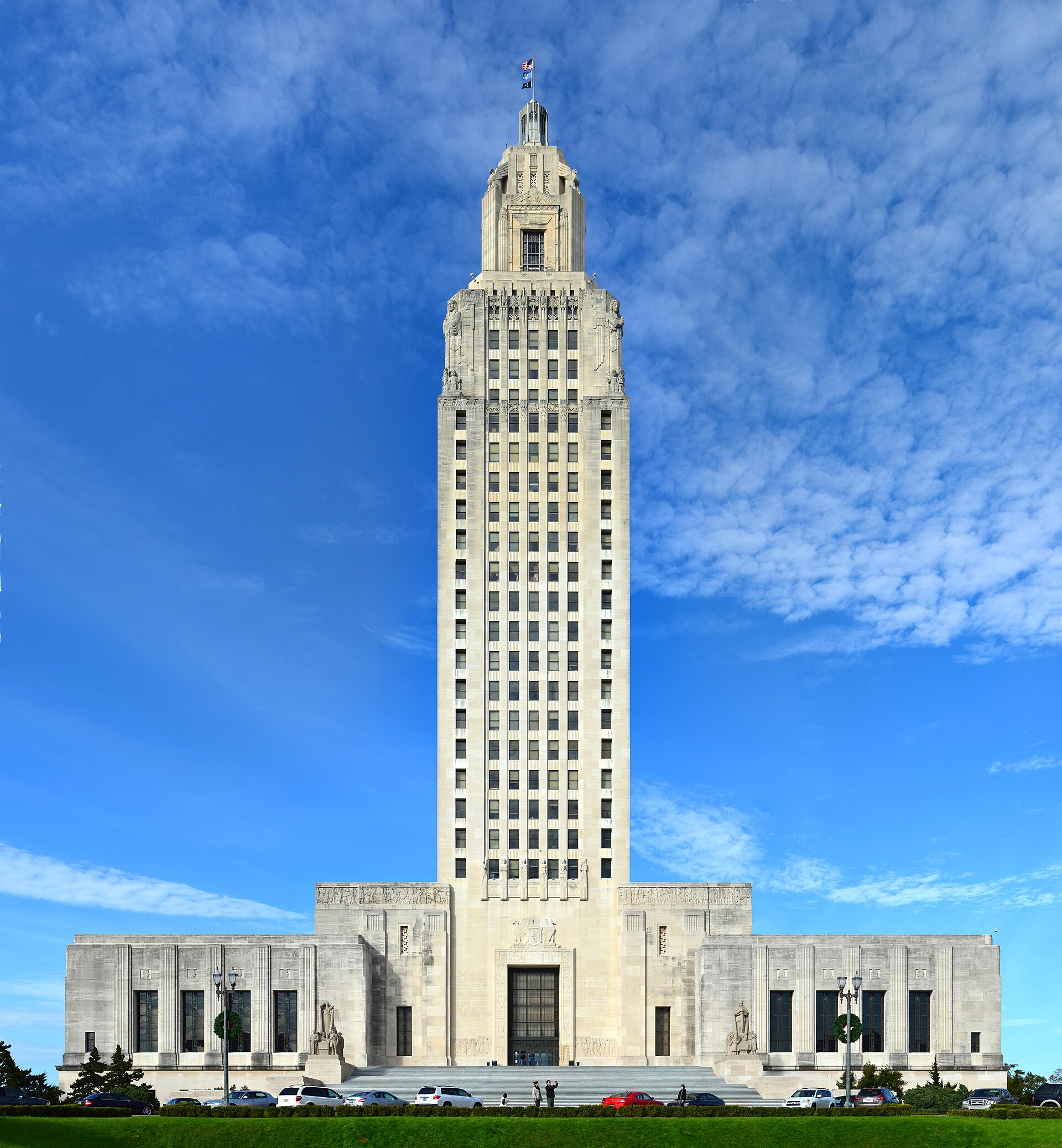
Louisiana lawmakers closed the 2026 Regular Session after nearly three months of debate that touched nearly every corner of state government, from congressional redistricting and teacher pay to workforce development, economic investment and energy policy.
By the time lawmakers adjourned, more than 900 bills had been sent to Gov. Jeff Landry’s desk, a balanced $47 billion budget had been approved and several of the session’s most contentious issues had reshaped the state’s political and policy landscape.
The session reflected a growing tension between two competing realities facing Louisiana. On one hand, state leaders point to more than $100 billion in announced private-sector investments, major industrial expansion and a need to prepare workers for future opportunities. On the other, lawmakers were forced to navigate slowing revenue growth, political disputes over representation and ongoing debates about education, local control and government structure.
Workforce Development Emerges as the Dominant Economic Theme
Perhaps the most consequential long-term outcome of the session was the Legislature’s sweeping focus on workforce development.
Business groups and policy organizations broadly agreed that Louisiana’s ability to capitalize on major economic development projects will depend on whether it can produce enough skilled workers to fill thousands of anticipated jobs.
Lawmakers approved a series of measures designed to strengthen workforce pipelines beginning in middle school and extending through higher education and technical training programs.
Among the changes approved were expanded career readiness standards, broader eligibility for TOPS Tech scholarships, streamlined dual enrollment opportunities and new workforce training initiatives through the Louisiana Community and Technical College System.
Lawmakers also created the Office of Business Workforce Solutions within Louisiana Works, a new entity intended to better align workforce training programs with employer demand.
According to Leaders for a Better Louisiana, the session represented the most significant workforce overhaul in more than a decade. The organization said the legislation was designed to connect Louisiana residents to employment opportunities created by major industrial and economic development projects announced throughout the state.
Senate President Cameron Henry framed the effort as preparation for a new era of economic growth.
“We are at a unique point in Louisiana’s history right now, building on two years of tax reform work that has already attracted more than $100 billion in new private industry investments heading into Louisiana,” Henry said after adjournment.
The Louisiana Association of Business and Industry also praised the workforce package, citing expanded training opportunities, stronger education-to-career pathways and additional investments in workforce readiness.
Budget Reflects Fiscal Caution
Despite ambitious economic goals, lawmakers approached spending with unusual caution.
The Legislature approved a roughly $47 billion state operating budget while confronting lower-than-expected revenue forecasts. A revised forecast reduced expected revenues by more than $100 million, forcing lawmakers to reconsider several proposed spending initiatives.
One notable casualty was the planned expansion of the LA GATOR education savings account program. Legislative leaders chose to delay expansion efforts until future revenue conditions become clearer.
At the same time, lawmakers directed substantial funding toward economic development initiatives, transportation projects, workforce training programs and higher education.
According to reporting by The Center Square, higher education received a significant funding increase, including additional formula funding for colleges and universities as well as hundreds of millions of dollars in capital outlay projects.
Henry defended the Legislature’s restrained approach, saying, “When the Revenue Estimating Conference tells us we are $113 million short in revenue for the current year ending June 30, 2026, and we have $104 million less in expected revenue next year, we have to press pause on expanding programs or starting up new programs for now. That’s the responsible thing that our constituents sent us here to do.”
Teacher Pay Remains Unresolved
One of the session’s biggest unanswered questions involves teacher compensation.
After more than 60% of voters rejected a constitutional amendment that would have generated funding for permanent teacher raises, educators were left uncertain about the future of the annual stipends that have supplemented paychecks in recent years.
Gov. Landry pledged to find another funding source for a one-time stipend and indicated a broader review of Louisiana’s school funding formula is likely before the 2027 legislative session.
Legislative leaders have since discussed using a portion of K-12 education funding to support another round of stipends, though the proposal requires additional legislative approval.
Members of the Louisiana Republican Delegation expressed optimism that lawmakers would again find a way to support educators.
“This legislature has been supportive of our teachers at every corner,” Sen. Rick Edmonds, R-Baton Rouge, said during the final days of the session.
The issue underscored the broader challenge facing Louisiana policymakers as they seek to improve educational outcomes while balancing fiscal constraints.
Redistricting Dominates Political Debate
While workforce policy may prove the session’s most lasting economic achievement, congressional redistricting generated the most political controversy.
The issue emerged after a U.S. Supreme Court decision invalidated Louisiana’s previous congressional map, forcing lawmakers into an expedited redistricting process.
The final map approved by lawmakers and signed by Gov. Landry is expected to reshape Louisiana’s congressional delegation and likely increase Republican representation in Washington.
According to reporting by The Center Square, the revised map would leave Louisiana with one majority-Black congressional district instead of two and could eliminate the district currently represented by U.S. Rep. Cleo Fields.
The debate sparked lengthy hearings, overnight committee meetings and significant opposition from Democratic lawmakers and civil rights advocates who argued the proposal diluted Black voting strength in a state where roughly one-third of residents are Black.
One of the sharpest criticisms came from Sen. Katrina Jackson-Andrews, D-Monroe, who told colleagues, “We can’t say we love people and then dilute your vote.”
Supporters argued the map better reflected political realities and would be more likely to withstand future legal challenges.
The issue is expected to remain in court for the foreseeable future.
Carbon Capture Debate Reveals Divide Between Growth and Local Control
Few issues illustrated Louisiana’s competing economic priorities more clearly than carbon capture.
The state has become a national focal point for carbon capture and sequestration projects, with dozens of proposed facilities planned across Louisiana.
Supporters view the projects as critical to future industrial growth, energy investment and emissions reduction efforts. Opponents argue local communities should have greater authority over projects that affect private property and land use.
Several bills seeking to strengthen local control or limit carbon capture authority failed to advance.
Legislative leadership and the governor consistently supported continued development of the industry, emphasizing economic opportunities and investment potential.
Rep. Travis Johnson, D-Vidalia, argued that the projects could bring transformative economic benefits to rural communities.
“For the first time ever in rural northeast Louisiana, folks are completely ecstatic,” Johnson said. “They have never seen these types of investments in their communities since I’ve been born.”
The outcome represented a significant victory for business interests and energy developers, while frustrating local activists and property rights advocates who had hoped for stronger protections.
Infrastructure, Insurance and Quality-of-Life Measures Advance
Beyond the headline political battles, lawmakers approved numerous measures with direct impacts on residents.
The Legislature added $50 million to Louisiana’s fortified roof program, which provides grants to homeowners seeking to strengthen their homes against hurricanes and severe weather.
Insurance Commissioner Tim Temple praised the investment, saying, “We all agreed that the fortified roof program is the quickest, most assured way to bring premium relief to citizens on their homeowners’ insurance.”
Lawmakers also voted to eliminate annual vehicle safety inspection requirements beginning in 2027.
Additional legislation established Louisiana’s first recreational alligator hunting season, strengthened anti-hazing laws, expanded online protections for minors and approved measures related to homelessness programs and public safety.
Looking Ahead
The 2026 session demonstrated how rapidly Louisiana’s priorities are evolving.
The state’s leadership is increasingly focused on preparing for unprecedented levels of industrial investment and economic expansion. Workforce development, infrastructure modernization and higher education funding all reflected that focus.
At the same time, disputes over redistricting, local governance, education funding and carbon capture revealed continuing divisions over how Louisiana should balance growth, representation and local control.
As lawmakers leave Baton Rouge and attention turns toward the 2027 election cycle, many of the session’s biggest questions remain unresolved. The future of teacher pay, continued legal battles over congressional districts, implementation of workforce reforms and the expansion of emerging industries will likely shape Louisiana’s political and economic agenda for years to come.
For Louisiana businesses, however, one message emerged clearly from the 2026 session: workforce readiness, economic competitiveness and long-term growth have become the Legislature’s defining priorities.
As Henry noted at the close of the session, “We are readying our state to meet the opportunities that will literally be life-changing for our people.”
BIZ Magazine.