
Some news stories are read. Others are felt.
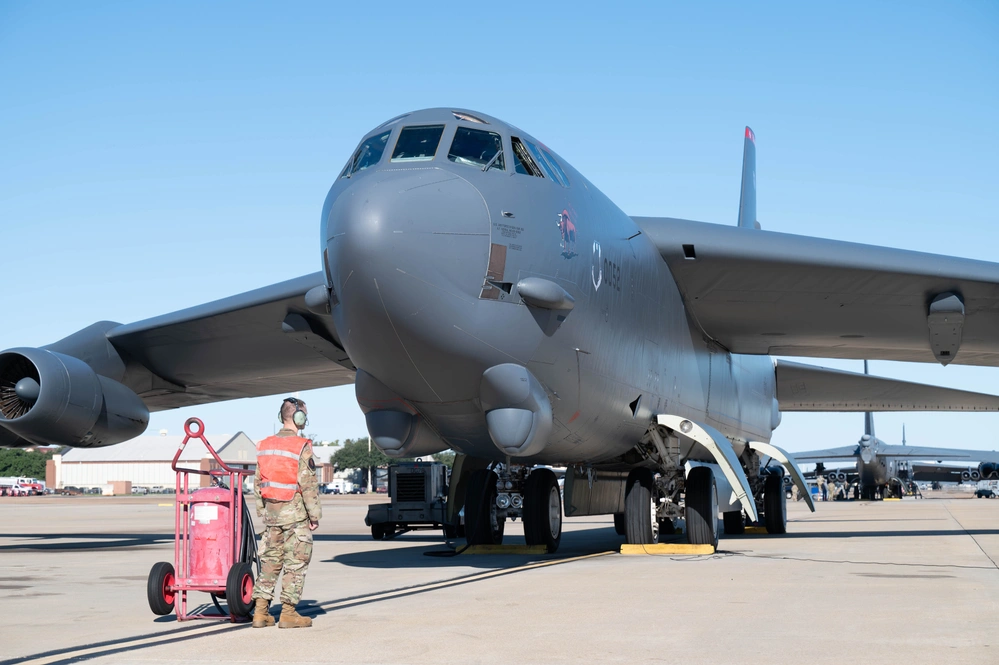
The crash of a B-52 Stratofortress at Edwards Air Force Base this week was one of those stories. According to reports, the aircraft went down shortly after takeoff during a test mission connected to the radar modernization program. Eight people were aboard, including military personnel, government civilians, government contractors and two Boeing employees. Officials have said the cause remains under investigation.
For many across the country, it was another tragic headline. For those of us in Northwest Louisiana, it was something more.
Barksdale Air Force Base is not just a military installation near our community. It is part of our community. Its people live in our neighborhoods, worship in our churches, shop in our stores, coach our kids and serve beside us in civic organizations. The sound of aircraft overhead is part of the rhythm of life here. We do not think of the Air Force as distant or abstract. We know the faces behind the mission.
That is why news like this hits home harder.
I remember two other crashes during my own Air Force career. One was a KC-135 over New England. The other was a B-52 over the Indian Ocean during Desert Storm. I still remember the feeling that came with those reports. Shock. Loss. A quiet heaviness that settles in when you know people went to work, climbed into an aircraft and did not come home.
That feeling returned when I read the news from Edwards.
The truth is, aviation in service to our nation is dangerous work. We sometimes forget that because excellence can make risk look routine. The men and women who fly, maintain, test and support these aircraft operate at a level of discipline most people never see. The checklists, training, briefings and procedures are all designed to manage risk. But risk is never completely removed.
Test missions carry their own kind of responsibility. They are often connected to the future of a weapons system, the safety of future crews and the readiness of the force. The work may not make front-page news when it goes right, but it matters every single day.
Think about that for a moment.
The B-52 has served this nation for generations. It remains a key part of American airpower, and modernization efforts are intended to keep it flying for years to come. Behind every upgrade, every test flight and every maintenance decision are people. Skilled people. Brave people. Families who wait for them to come home.
In business, we often talk about mission, execution, innovation and leadership. Those words matter. But the military reminds us that mission is not just a statement on a wall. It is a commitment made by people who accept responsibility, sometimes at great personal risk.
There is a leadership lesson here for all of us.
When tragedy strikes, we should resist the urge to move too quickly past it. Before the investigation, before the analysis and before the lessons learned, there must be room for grief and respect. Families have lost loved ones. Units have lost teammates. Communities have lost people who served something larger than themselves.
That matters.
Here in Northwest Louisiana, we understand the bond between a base and a community. Barksdale’s mission strengthens our economy, but its impact is much deeper than dollars and jobs. It shapes our identity. It reminds us that service is not theoretical. It is personal.
So this week, we pause.
We pray for the families of those lost. We pray for the Air Force community at Edwards and beyond. We pray for the crews at Barksdale and every installation where men and women continue to do dangerous, necessary work with professionalism and courage.
Keep this in mind. Freedom is often protected by people whose names we may never know, doing work most of us will never fully understand.
And when one of them is lost, it should never feel like just another headline.
David Specht is president of Specht Newspapers, Inc., publisher of BIZ. Magazine.