
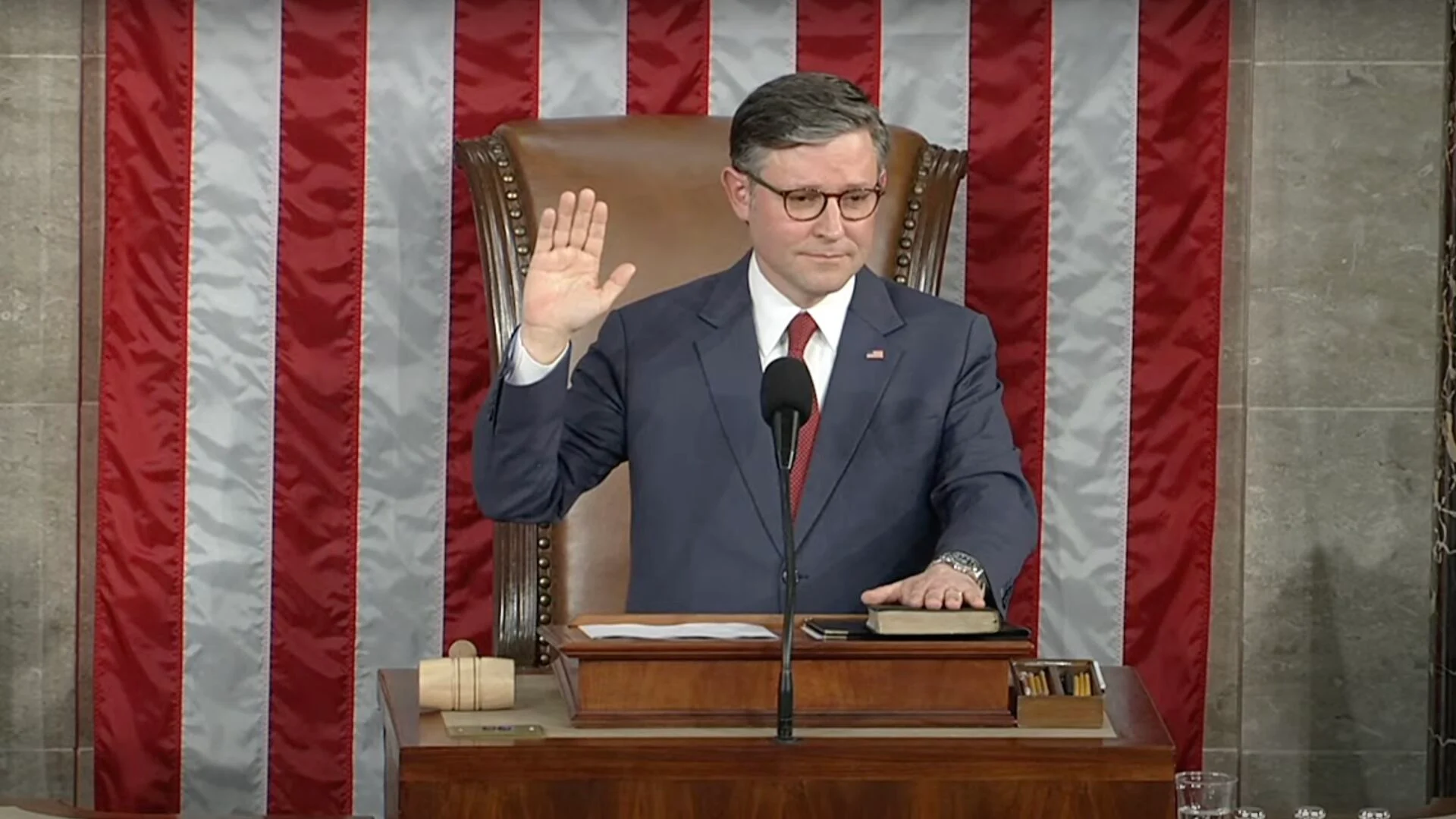
WASHINGTON — House Speaker Mike Johnson said congressional Republicans are on track to complete all 12 fiscal year 2026 appropriations bills this week, calling the move a “significant sign of progress” and a return to regular order in the federal budget process.
Johnson said the appropriations package includes funding for Defense, Homeland Security, Transportation, and Labor-Health and Human Services. He emphasized that the legislation reflects what he described as “Trump-era spending levels” and ends budgets negotiated under the Biden administration.
“Once we pass the final batch this week, Republicans will have finally replaced the last of any Biden-era spending levels with Trump-era spending levels,” Johnson said. “No more Biden and Pelosi negotiated budgets. We’ve turned that page and we are not turning back.”
Johnson said House Republicans are restoring a “committee-led, member-driven” appropriations process that limits leadership-level negotiations and provides full-year government funding “without unrelated policy provisions.”
He also discussed the start of the 2026 tax season and the implementation of the Working Families Tax Cuts, which he said are designed to lower taxes for middle- and lower-income households. Johnson cited figures showing an average $4,000 tax refund and a 15 percent average cut for families earning between $15,000 and $80,000 annually.
The package includes a permanent doubling of the standard deduction, a $6,000 deduction for seniors, and provisions eliminating taxes on tips and overtime pay. Johnson said the plan also increases the Child Tax Credit, extends paid leave and adoption tax credits, and expands flexible spending accounts.
“Everybody’s going to see that this was written for lower- and middle-class hardworking families in America, and they’re going to benefit from that,” Johnson said.
Johnson also reflected on his recent address to the United Kingdom Parliament, noting he was the first U.S. House Speaker to do so. He said the visit underscored the “special relationship” between the United States and the U.K. and the importance of defending Western democratic values amid global challenges.