
(The Center Square) – Global oil prices soared after second-term Republican President Donald Trump’s address to the nation Wednesday night.
West Texas Intermediate crude traded at an unusual premium over the global benchmark, European Brent, as the market braced for a prolonged conflict with Iran. In a rare market inversion not seen in nearly four years, U.S. WTI crude oil futures settled at $111.29 per barrel on Thursday, marking a 11.16% jump for the day.
This pushed the American benchmark nearly $3 above international Brent crude, which ended the trade session at $108.52, up about 7%.
Brent crude typically carries a higher price because of its easy access to global shipping lanes. The continued closure of the Strait of Hormuz and Trump’s speech have caused American prices to leapfrog the international benchmark.
Speaking from the White House, Trump said that U.S. military pressure would intensify significantly if a deal is not reached soon.
“We are going to hit them extremely hard over the next two to three weeks,” the president said, threatening to dismantle Iran’s power grid and send the nation “back to the Stone Ages.”
“Many Americans have been concerned to see the recent rise in gasoline prices here at home,” said Trump. “This short-term increase has been entirely the result of the Iranian regime launching deranged terror attacks against commercial oil tankers and neighboring countries that have nothing to do with the conflict.”
While Trump insisted the U.S. is no longer dependent on the Strait of Hormuz, he suggested the military might help allies clear the passage, which has been mostly blocked for five weeks. The standoff is blocking about 20% of the world’s oil supply, keeping it in the Persian Gulf.
“So, to those countries that can’t get fuel, many of which refuse to get involved in the decapitation of Iran – we had to do it ourselves – I have a suggestion: No. 1, buy oil from the United States of America,” said the president. “We have plenty, we have so much. And No. 2, build up some delayed courage.”
Since Iran closed the Strait of Hormuz to seaborne traffic six weeks ago, the price of WTI crude oil has risen 40.8% while Brent has climbed approximately 35.6%.
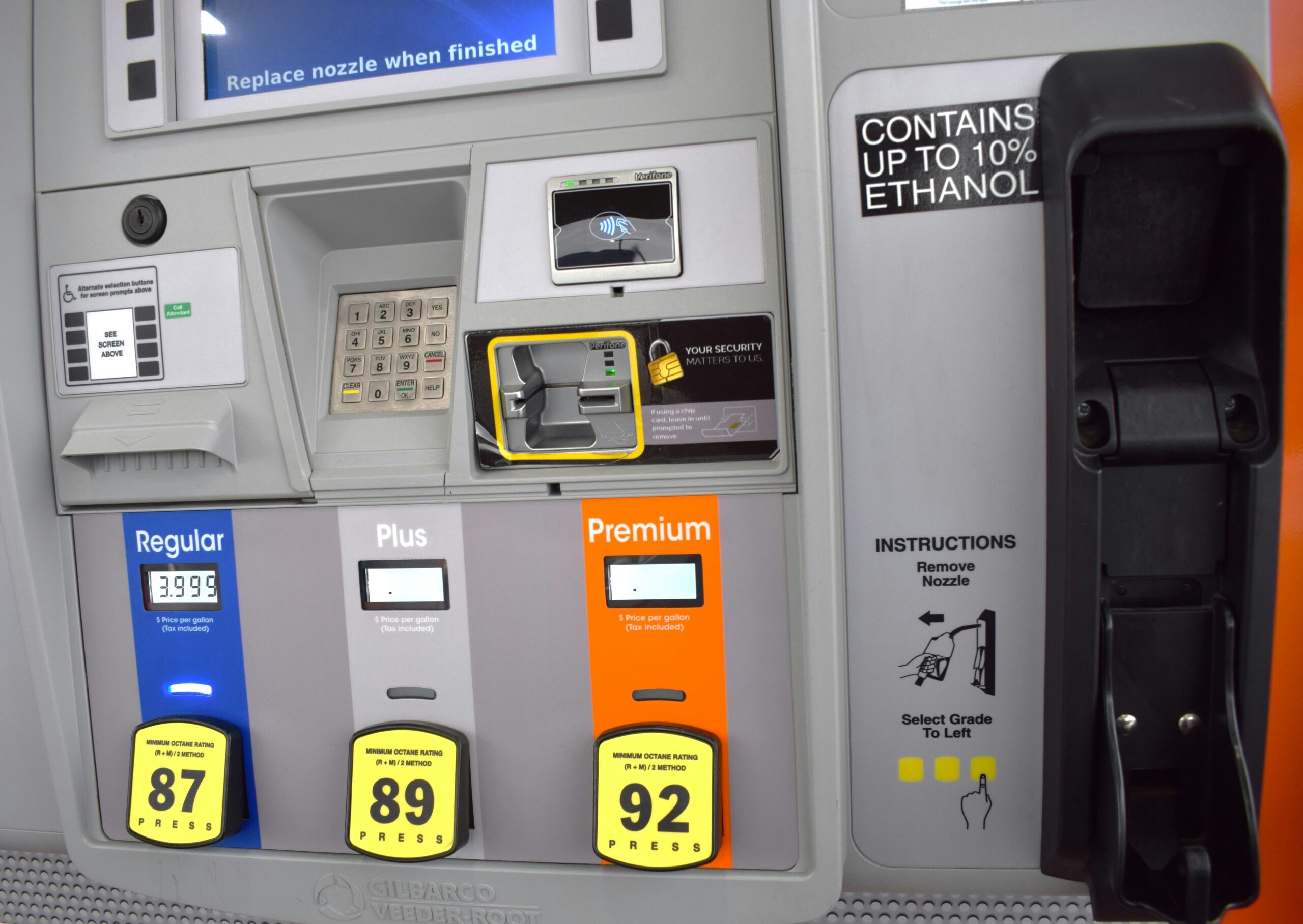
U.S. gasoline prices are up 39.7% in the same period, with the national average on Thursday reaching $4.08 per gallon, a more than 3½ year high, according to AAA data.
“President Trump has invited the world to bid on U.S. crude oil, which means a motorist in Tokyo is now effectively outbidding a motorist in Atlanta or Birmingham,” said Ed Hirs, energy fellow in the Department of Economics at the University of Houston.
There is no incentive for an oil producer in Texas to sell to a local refinery at a discount when they can fetch a premium for their product on the global market, Hirs said.
“But overall, high oil prices help the U.S. economy more than high gasoline prices hurt it because it boosts our overall GDP; we’re essentially a net exporter of energy now,” said Hirs. “But that’s not much comfort to the lower-income workers who spend a larger part of their income on energy now. The economy might look better on paper, but for many people paying higher prices at the pump, it’s a net loss.”
The United States still imports about 6 million barrels a day of heavy oil, not the light, sweet WTI crude, to match the needs of domestic refineries, noted Hirs.
“About 4 million plus barrels of that oil,” he said, “comes into the U.S. from Canada, our closest ally, and in the midsection of the country – Illinois, Colorado, Wyoming and other places along the path of the pipeline, oil and gasoline prices will typically be a little lower.”