
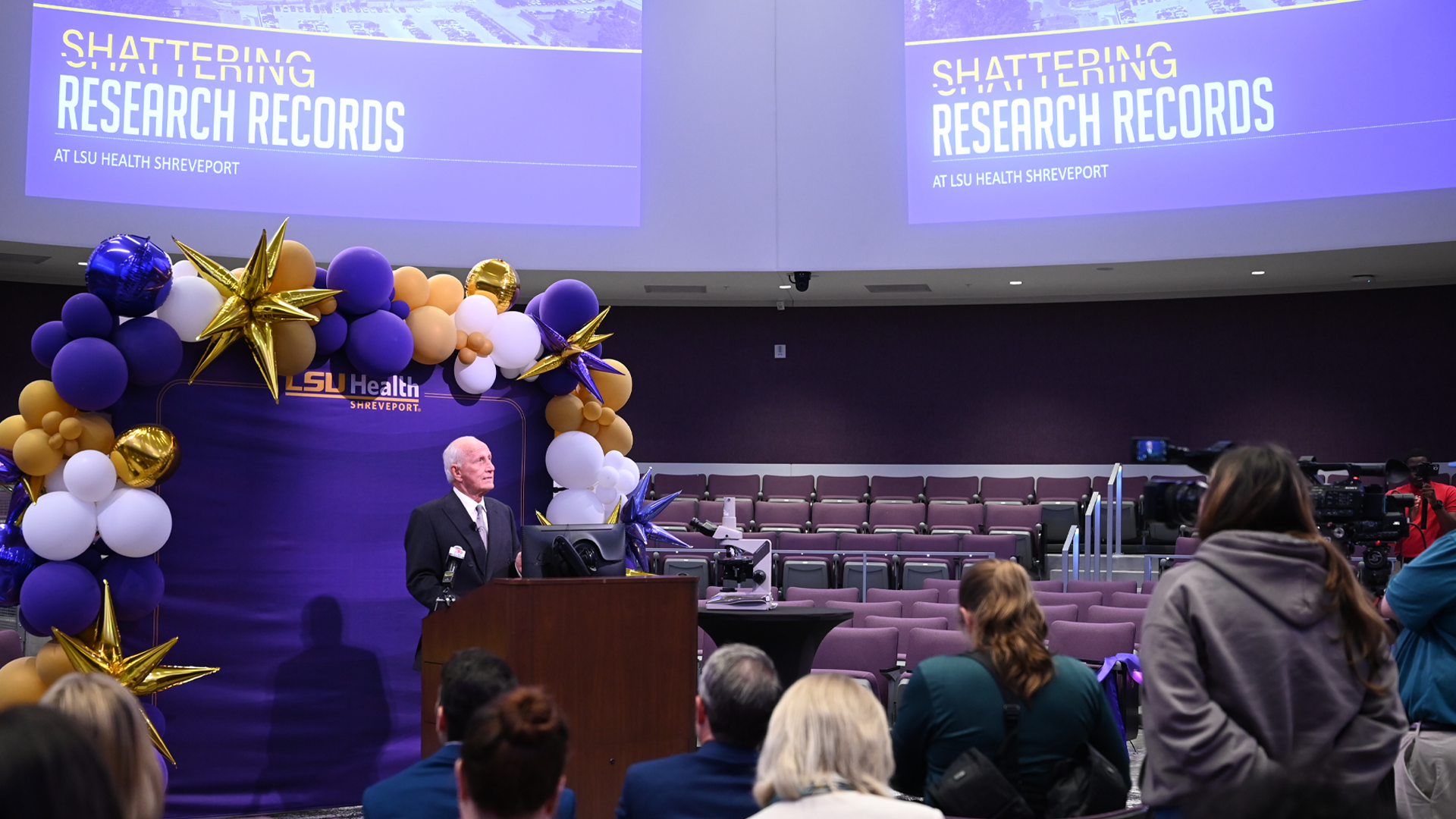
SHREVEPORT, La. — LSU Health Shreveport secured a record $44.3 million in external research funding in fiscal year 2026, up nearly 71% from $25.9 million the previous year, the institution said. Two federal awards supported the expansion of immunology research and the creation of a center focused on how cells regulate metabolism.
The National Institutes of Health awarded an $11 million renewal to the Center for Applied Immunology and Pathological Processes. The funding will support research infrastructure and help early-career faculty develop independent research programs.
A five-year, $7.5 million National Science Foundation award will establish the Center for Post-Transcriptional Regulation, where researchers will study how RNA and changes to proteins regulate metabolism. LSU Health Shreveport said the award is its first NSF center grant and helps diversify a research portfolio that has historically received about 80% to 85% of its funding from NIH.
“The NSF award was a major milestone because it demonstrated our ability to compete successfully outside of our traditional funding strengths,” said Oren Rom, assistant vice chancellor for research at LSU Health Shreveport.
The institution submitted about 225 grant proposals in fiscal 2026, up roughly 10% from the prior year. Ten researchers joined during the fiscal year, bringing the total recruited during the expansion to 26. Two postdoctoral researchers also became the first to earn NIH Pathway to Independence Awards while training at LSU Health Shreveport. The awards help researchers move from postdoctoral training into independent research.
LSU Health Shreveport also signed an agreement with Louisiana Tech University that provides a framework for joint grant proposals, student training and shared use of specialized laboratories and equipment.
As its research program grows, LSU Health Shreveport plans to convert the former Sears property at Mall St. Vincent into laboratory space through the LSU Health Sciences Foundation. The project would add capacity for cardiovascular disease and cancer research and free up lab space on the main campus for work in fields including infectious disease, neuroscience and addiction.