
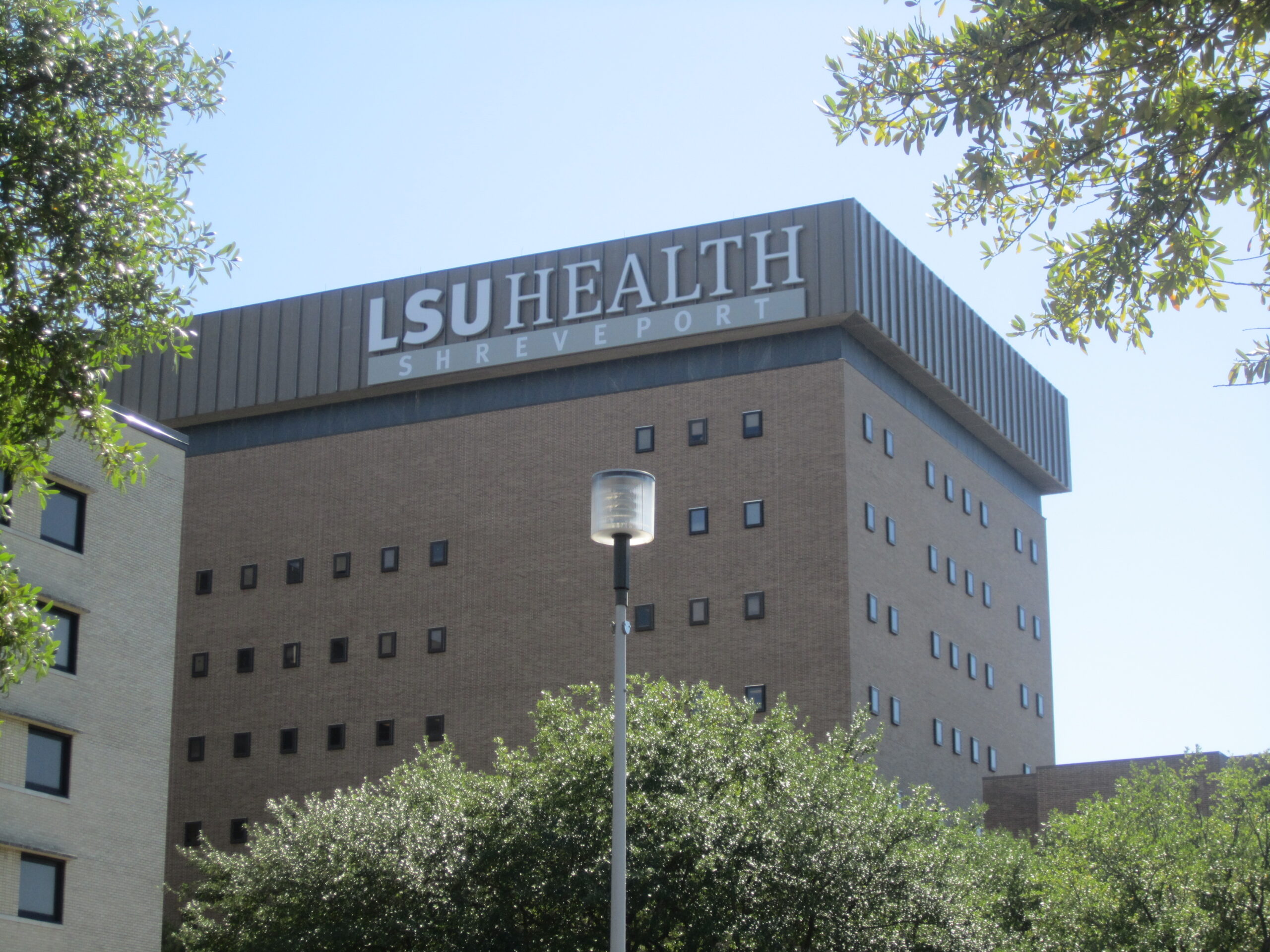
SHREVEPORT, La. — LSU Health Shreveport has completed major upgrades to its Anatomical Sciences Wing, combining a multimillion-dollar laboratory renovation with new virtual reality technology designed to enhance medical education.
The project includes a $3 million, multi-year renovation of the Gross Anatomy Laboratory and the addition of a new Virtual Reality Anatomy Lab featuring 25 immersive workstations. The VR lab represents an investment of more than $300,000 and is designed to complement traditional cadaver-based instruction with advanced digital tools.
“These spaces work together in a truly synergistic way,” said Kevin J. McCarthy, PhD, professor of cellular biology and anatomy at LSU Health Shreveport. “What we now have is a revitalized approach to how we teach human anatomy, that combines the classic principles of anatomy education with some of the most advanced instructional tools available today.”
Each VR workstation is powered by Dell Pro Max Tower T2 desktop computers equipped with 32GB of RAM and NVIDIA RTX video processors, paired with Meta Quest 3 headsets running VH Dissector XR software from Touch of Life Technologies. The system allows students to examine and dissect virtual cadavers in three dimensions.
“With the headset on, students can see a cadaver in full 3D and carefully dissect it layer by layer. Muscles, nerves, vessels, organs, everything,” McCarthy said. “They can rotate the body instantly, examine cross-sections and visualize anatomy with ease in ways that simply aren’t possible in a traditional lab alone.”
The virtual platform enables students to view entire anatomical structures simultaneously and explore cross-sectional perspectives without physically repositioning specimens. A 2D version of the software is also available for use on personal laptops, extending learning beyond the lab.
“Beyond the novelty, the educational potential of this technology is remarkable,” said Claude LaHaye, a second-year medical student. “As a visual learner, I can honestly say this has the potential to be one of the greatest contributions to anatomy education that I have ever encountered.”
McCarthy emphasized that virtual tools are designed to reinforce, not replace, hands-on dissection.
“There is no substitute for hands-on cadaveric dissection,” he said. “But this gives students an extremely powerful way to reinforce what they learn, especially between lab sessions. It helps cement their understanding of the human body.”
The renovated Gross Anatomy Lab now includes 34 workstations with ergonomic, ADA-compliant adjustable tables, integrated computers and monitors, enhanced lighting and a closed-circuit HVAC system designed to reduce formaldehyde exposure. The space also allows instructors to broadcast demonstrations simultaneously to all stations.
The facility can accommodate more than 150 students at once, serving learners from the Schools of Medicine, Graduate Studies and Health Sciences, including programs in physical therapy, physician assistant studies and occupational therapy.
“This laboratory renovation is also major step forward in how we deliver anatomy education,” McCarthy said. “Since the workstations are interconnected with the Professor’s workstation, we can ensure that every student receives the same instruction at the same time, with the ability to immediately apply it at their own workstation.”
With 25 VR stations, LSU Health Shreveport now operates one of the largest virtual anatomy training environments in Louisiana. The university plans to expand use of the facility to support resident and fellow training in the future. Students began using the VR lab earlier this year.
“You wouldn’t want a mechanic who’s never touched a car working on your vehicle,” McCarthy said. “In the same way, you wouldn’t want a physician who doesn’t deeply understand anatomy, caring for patients. This facility helps ensure our students are exceptionally prepared.”