
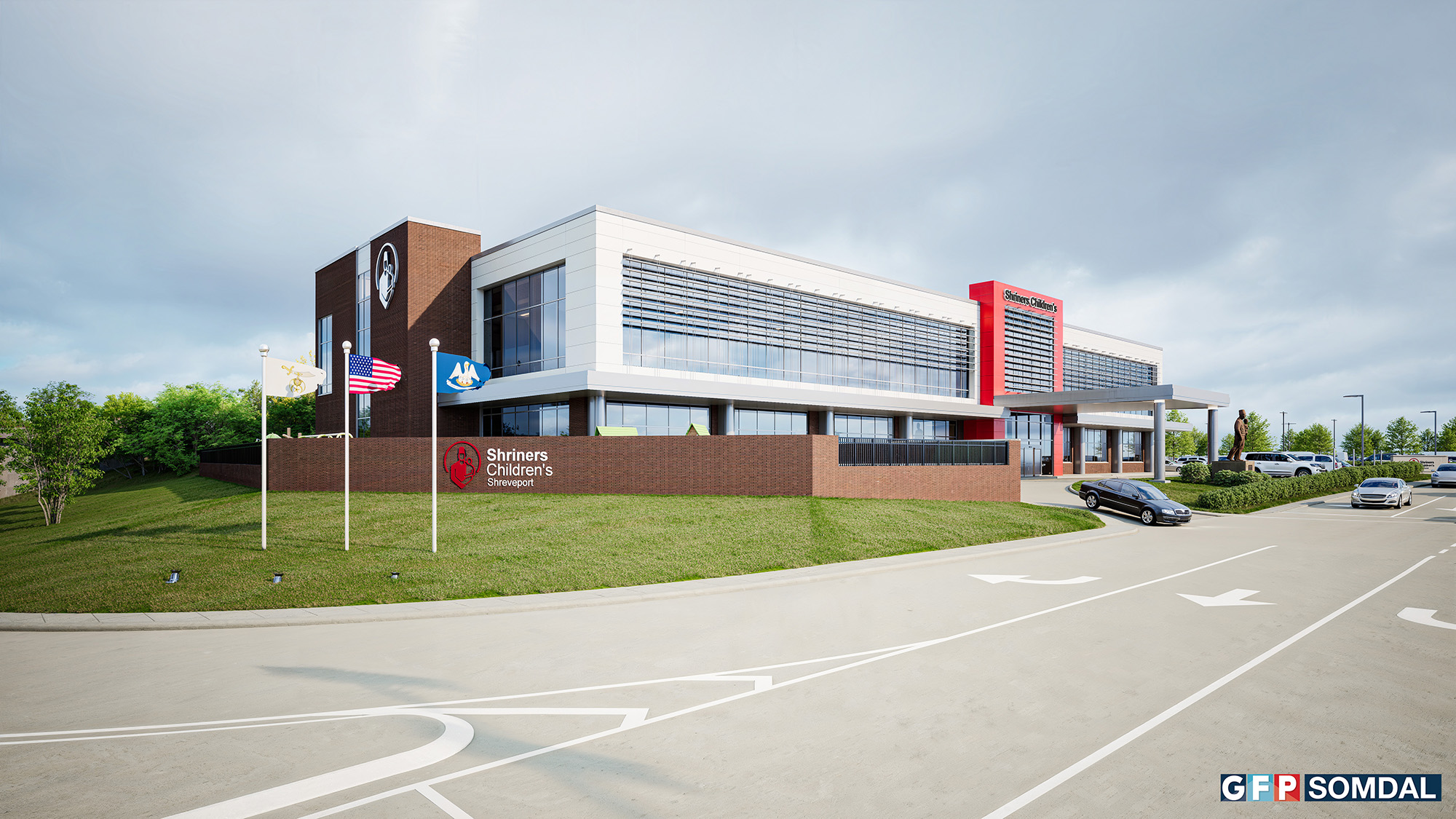
A planned Shriners facility and a regional impact study show two sides of healthcare’s economic role
Healthcare’s contribution to Shreveport-Bossier is measured in more than patient visits. It also takes shape in specialized buildings, skilled employment and the training of future professionals.
Shriners Children’s Shreveport offers a new example. Its planned two-story, 43,000-square-foot outpatient facility at Kings Highway and Samford Avenue will stand across from its current location. The anticipated opening is spring 2028, according to the project announcement published in September.
Hand Construction will build the facility, designed by GFP Somdal. Plans include 19 clinic rooms, motion analysis and imaging spaces, therapy services, a sports medicine gym and space for making custom orthotic and prosthetic devices.
“We expect the number of children we serve to continue growing, and this facility is being designed with that future in mind,” administrator Susan Bryant said in the announcement.
The project illustrates how healthcare investment connects clinical needs with construction, design and specialized services. It is a future facility, not additional capacity already in operation.
The region’s existing medical institutions provide another measure of the sector’s reach. An economic-impact study released in April by LSU Health Shreveport and Ochsner LSU Health estimated their combined fiscal 2025 impact in North Louisiana at $3.6 billion.
The Tripp Umbach study identified 6,662 direct jobs and 18,652 additional jobs supported through indirect and induced activity across that region. The latter are modeled economic effects, not employees on the institutions’ payrolls. The figures cover North Louisiana, not just Shreveport-Bossier, and do not represent every healthcare provider.
Workforce preparation is part of that connection. Ochsner LSU Health reported 2,689 clinical placements through 98 active partnership agreements in 2025, providing hands-on training opportunities.
Together, the examples show healthcare working on two timelines: sustaining services and employment today while investing in the facilities and professionals needed for tomorrow.