
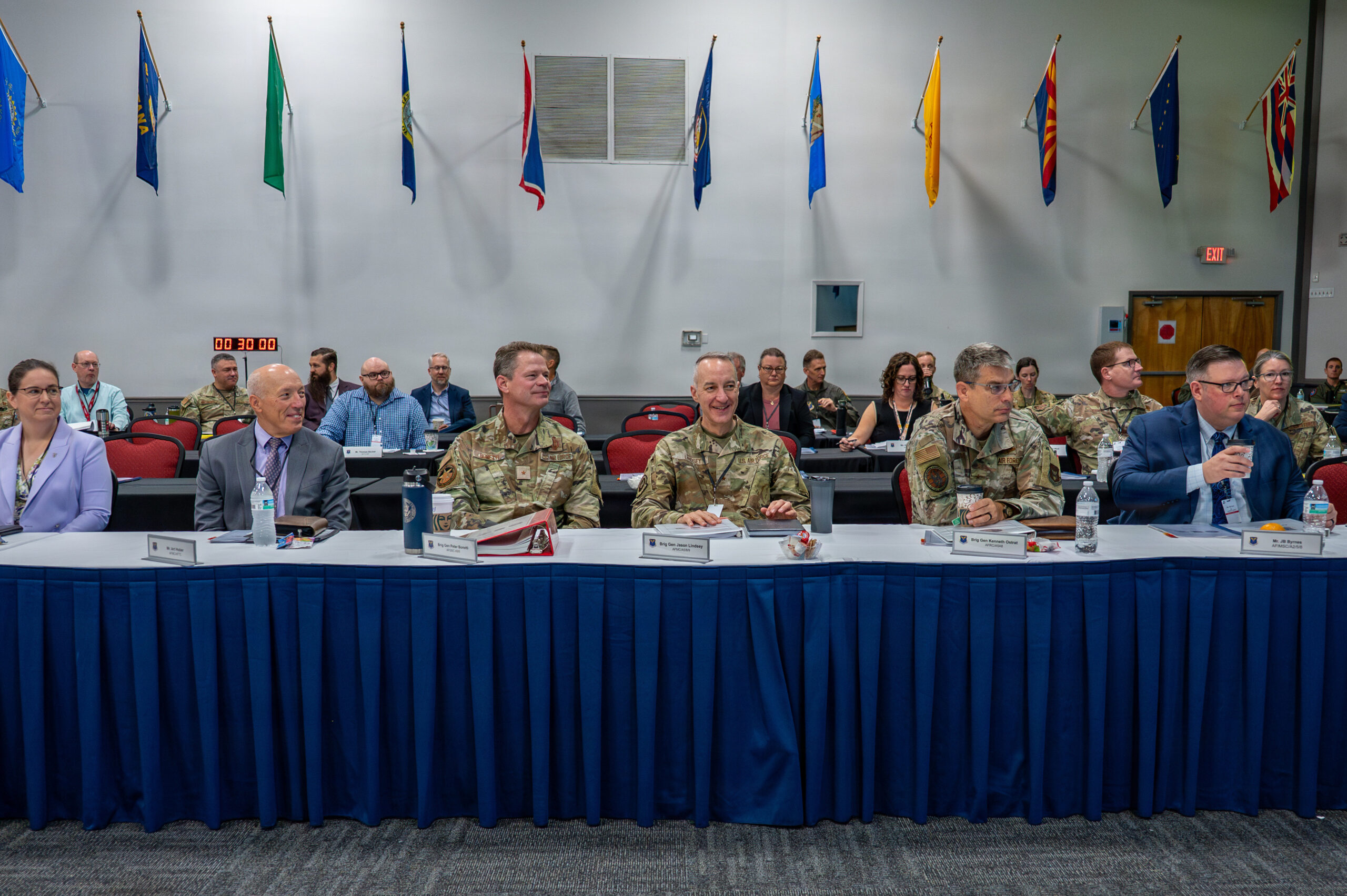
BARKSDALE AIR FORCE BASE, La. — Air Force Global Strike Command hosted a three-day Technology, Acquisition and Sustainment Review at Barksdale Air Force Base, bringing together senior military and acquisition leaders to align modernization priorities with operational requirements for the long-range strike mission.
The summit, held June 23-25, was organized by the command’s Strategic Plans, Programs and Requirements Directorate in coordination with its Logistics, Engineering and Force Protection Directorate, the Office of the Assistant Secretary of the Air Force for Acquisition, Technology and Logistics, and Air Force Materiel Command.
The event was co-chaired by Lt. Gen. Luke Cropsey, military deputy in the Office of the Assistant Secretary of the Air Force for Acquisition, Technology and Logistics; Gen. Thomas A. Bussiere’s successor, Gen. S.L. Davis, commander of Air Force Global Strike Command; and Lt. Gen. Linda Hurry, commander of Air Force Materiel Command.
“The TASR summit ensures we are directly aligning our resources with our most urgent acquisition needs,” Cropsey said. “We are making the hard decisions today to guarantee our Airmen maintain a decisive advantage tomorrow.”
The review focused on coordinating acquisition, sustainment and modernization efforts across organizations responsible for developing and supporting Global Strike capabilities. According to the command, the meetings are designed to connect operational leaders with the acquisition enterprise, allowing senior officials to address enterprise-wide issues and resolve complex challenges.
“Our acquisition strategies must be aligned with and support our Airmen who execute the mission,” Davis said. “By sitting down face-to-face with the acquisition and sustainment experts, we can cut through the red tape and accelerate the fielding and sustainment of Global Strike systems.”
Key discussion areas included modernization of legacy weapons platforms, maintenance and sustainment funding, workforce demands, cybersecurity initiatives, communications upgrades, counter-small unmanned aircraft systems, pilot simulator modernization and facility improvements.
The summit also addressed longer-term modernization programs, including strategic satellite communications, nuclear command, control and communications, nuclear certification, future weapons development, and lifecycle planning for the E-4B aircraft and helicopter fleets.
“AFMC’s priority is to deliver integrated, enterprise-wide solutions that keep our warfighters lethal and ready,” Hurry said. “Working directly with Global Strike leadership at the TASR allows us to hear their exact needs, remove roadblocks on the spot, and accelerate the readiness and modernization efforts that keep our strategic platforms in the fight.”
Air Force Global Strike Command said the review is intended to ensure research, development, acquisition and sustainment programs remain aligned with the operational requirements of the Air Force’s strategic deterrence mission.