
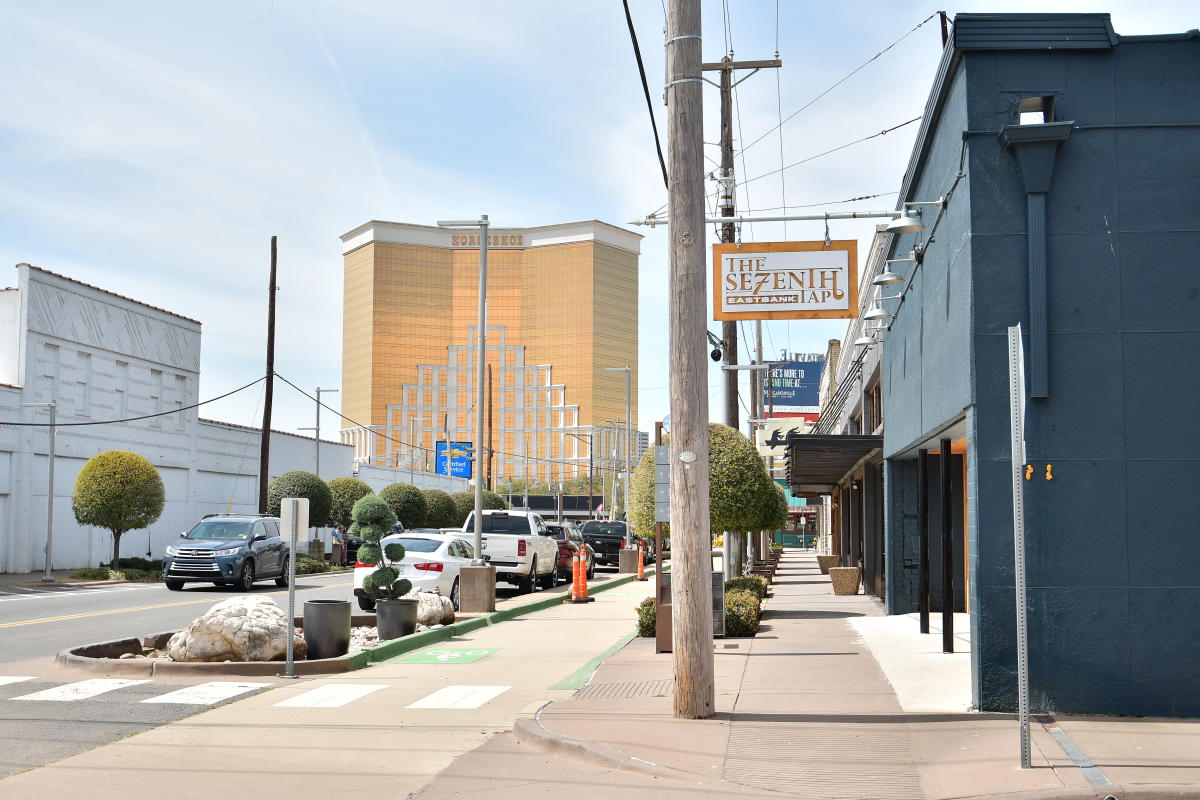
BOSSIER CITY, La. — Bossier City leaders are moving forward with an ambitious plan to tie together the city’s casinos, East Bank District, Louisiana Boardwalk and other riverfront attractions into a single tourism and entertainment destination known as “The Row.”
The Bossier City Council on Tuesday introduced ordinances creating two economic development districts, The Row Economic Development District and The Row II Economic Development District. The measures passed on first reading and will return for final consideration following the required public process. The ordinances authorize creation of the districts, separate trust funds and a cooperative endeavor agreement governing how future revenues could be used.
Councilman Chris Smith, who sponsored the measures, framed the proposal as a broader decision about Bossier City’s future.
“There are moments in life when a city must decide whether we’re satisfied simply managing what we have or whether we’re ready to imagine what we can become,” Smith said.
The vision includes the city’s casinos, Louisiana Boardwalk, East Bank District, Chasing Aces, hotels, restaurants, retail, entertainment and riverfront. Rather than marketing those attractions as separate destinations, Smith said the goal is to give visitors more reasons to move between them, extend their stays and spend more money in Bossier City.
“When visitors have more reasons to explore, they stay longer,” Smith said. “When they stay longer, they spend more money in our restaurants, our hotels, our retail shops, and our entertainment venues.”
The city’s proposed cooperative endeavor agreement describes the goal as developing and promoting a premier riverfront destination that unifies gaming and resort hospitality, live entertainment, sports, dining, retail and local cultural offerings into a single visitor destination.
Smith said the idea is not to erase the identity of existing properties or businesses.
“The goal is not to replace the identities of our existing businesses, but the goal is to place them within a larger destination that makes every part of our area stronger.”
The documents contemplate projects ranging from streetscaping, transportation and utility infrastructure to beautification, safety and security improvements. Funds also could support transportation connecting attractions, new tourism and entertainment offerings and performance-based grants to new or expanding businesses.
No new tax approved yet
Despite much of Tuesday’s discussion centering on a possible additional tax, the council did not impose a new tax Tuesday.
Smith emphasized that point during the meeting.
“Today we’re only voting on establishing the district lines for The Row and The Row Two,” he said. “Today’s vote is not about a tax. It does not impose a tax.”
The legislation creating the districts establishes the legal structure that could allow additional sales, use or hotel occupancy taxes to be considered later.
Under the proposed cooperative endeavor agreement, the districts would have authority under state law to levy additional sales and use taxes of up to 2% and/or hotel occupancy taxes of up to 2% to finance economic development projects. Any proceeds would go into separate district trust funds dedicated to economic development.
Smith used a potential 2% sales tax during his presentation to illustrate how the mechanism might work, saying it would amount to $1 on a $50 purchase.
The two districts were created separately in part because of the unique tax structure surrounding casino operations, according to Mike Busada, a partner with Butler Snow whose practice includes economic development, project finance and municipal bonds.
The proposed districts include Margaritaville Resort Casino, Horseshoe Bossier City, Boomtown Bossier City and Live! Casino & Hotel Louisiana among the casino properties identified in the agreement.
Although revenues would be deposited into the respective district trust funds, the agreement allows money generated in either district to be spent on approved projects anywhere within the boundaries of the two districts when those projects further the overall development vision.
Nine-member board proposed
Day-to-day development planning would be handled by a new nonprofit organization, The Row Economic Development Corporation, serving as district manager.
The proposed corporation would have a nine-member board. The president and CEO of the Greater Bossier Economic Development Foundation, or a designee, would serve as chairman. Eight additional members would be recommended by the mayor and affirmed by the City Council.
Five seats would originate from organizations representing businesses within the districts: three nominees representing the casino operators, one representing Louisiana Boardwalk merchants and one representing East Bank merchants. The remaining appointments would come through the mayor and council process.
Board members would be required to have at least five years of experience in fields such as financial services, hospitality, commercial development, marketing or business ownership.
The Greater Bossier Economic Development Foundation also would be hired to provide administrative services to the corporation for at least the first two years.
Individual projects would be recommended by the corporation but remain subject to city approval.
The agreement also includes safeguards intended to prevent one category of spending from consuming most of the revenue. No more than 30% of district revenue could be spent in any one of four project categories without approval from three-fourths of the corporation’s shareholders. Performance-based grants to individual businesses would require unanimous approval of board members present and voting.
Questions raised over district boundaries
The proposal did draw questions during Tuesday’s meeting.
Resident Tara Thomas questioned why an earlier district map reportedly contained 129 registered voters while the current boundaries contain none. She also raised concerns about commercial parcels excluded from the district and whether those exclusions could create an advantage for businesses operating immediately outside the additional tax area.
“I think the boundaries matter now because they determine who is inside the district, who’s charged or who pays the tax,” Thomas said.
Busada said residential properties were excluded in part to prevent residents inside the district from being subject to the additional district tax on purchases such as online orders delivered to their homes.
Thomas also questioned the proposed board structure, particularly three seats tied to casino interests compared with one representing East Bank merchants.
Officials said casinos are expected to provide the largest share of initial district revenue, which contributed to the decision to give them greater representation.
Councilman Vince Maggio, who disclosed a financial interest involving property in the area, abstained from the district votes.
Maggio also voiced concern about the potential impact of an additional 2% tax on small businesses in the East Bank area.
“People don’t realize what it costs a small business to operate nowadays,” he said. “Overhead kills you.”
A long-term structure
The cooperative endeavor agreement contemplated by the ordinances would initially run for 25 years and automatically renew for additional 15-year periods unless one of the parties terminates it under the agreement.
Officials emphasized that the district revenue would remain dedicated to projects within The Row rather than becoming another unrestricted source of city revenue. The agreement requires separate trust funds and outlines procedures for collecting, accounting for and disbursing the money.
Support letters included in the council packet came from organizations including the Bossier Chamber of Commerce, Greater Bossier Economic Development Foundation and Bossier Fraternal Order of Police Lodge 39.
GBEDF Executive Director David “Rocky” Rockett described the proposal as an effort encompassing Bossier’s East Bank, Boardwalk and casinos, with the potential to increase jobs, investment and tourism.
Smith said the effort has evolved over roughly nine to 10 months of work with business owners and economic development professionals after conversations began approximately a year and a half ago about creating an entertainment district.
The council’s action Tuesday represents only the beginning of the process. The ordinances must return for final adoption, and any future tax levy would require separate action.
But the documents make clear the objective extends beyond establishing another taxing district.
The stated goal is to turn a collection of individual Bossier City attractions into one recognizable destination, using dedicated revenue to improve connectivity, infrastructure, public spaces, safety and the overall visitor experience.