
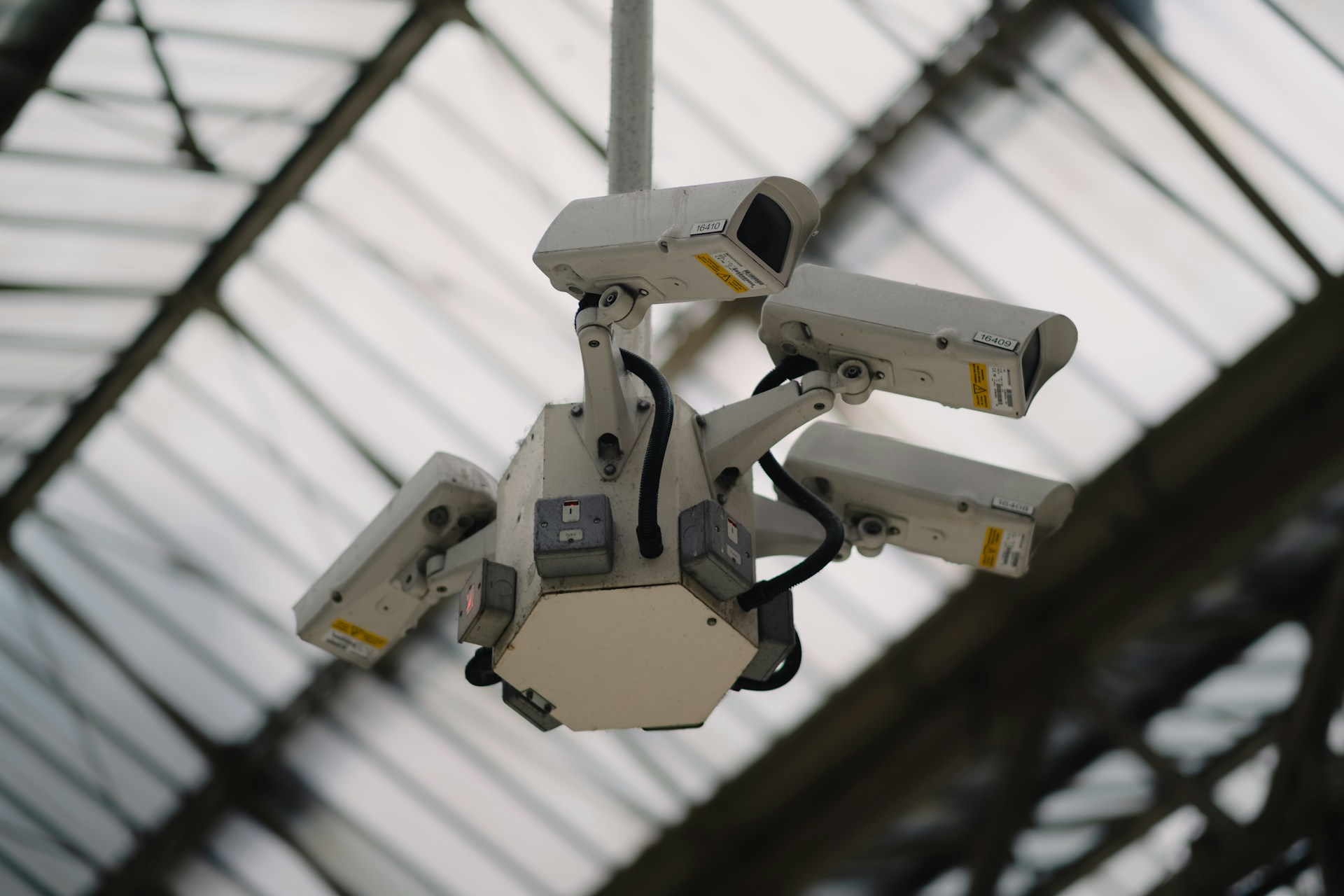
Proposed ordinance would allow participating businesses to share selected camera feeds with police through existing Axon Fusus technology
BOSSIER CITY, La. — Bossier City officials are considering a program that would allow local businesses to voluntarily share access to their security cameras with the Bossier City Police Department, potentially giving investigators faster access to video evidence when crimes occur.
The City Council advanced an ordinance Tuesday, Nov. 3, that would authorize Mayor Thomas Chandler to enter into cooperative endeavor agreements with private businesses for camera access through the department’s existing Axon Fusus technology platform.
The ordinance received its first reading and has not yet received final approval.
Bossier City Police Chief Daniel Haugen told council members that the department already uses the technology to consolidate video and evidence from multiple sources. The proposed agreements would extend that capability to participating private businesses.
“This piece of it is just going to allow private businesses giving us access into their camera system,” Haugen said. “It would be on a willing basis. It’s nothing that we’re going to mandate.”
Haugen explained that the arrangement could eliminate the need for detectives to travel to businesses to retrieve recordings on portable storage devices. Instead, authorized personnel could access participating camera systems remotely when investigating incidents.
The department has already been testing the technology with some businesses, including hotels and Circle K convenience stores, Haugen said.
Participation would be voluntary
Haugen emphasized that businesses would decide whether to participate and which cameras they would make available.
The arrangement would not require businesses to provide access to every camera on their premises.
“If they’ve got private cameras that they don’t want to open up, they don’t have to,” Haugen told council members.
City officials also confirmed that businesses could withdraw from the program at any time.
The proposed agreements would establish the terms of participation and allow the mayor to execute agreements with individual businesses without returning to the council for separate authorization each time.
Council members questioned police officials about data ownership, access controls, compatibility with existing camera systems and the ability of participating businesses to discontinue access.
Haugen said the platform maintains records of who accesses the system, including login information and timestamps.
Lt. Michael Booker addressed questions about how long evidence would be retained.
“Most of our retention rate is three years,” Booker said, explaining that recordings would generally be automatically removed after that period.
He added that evidence associated with active investigations could be retained longer based on guidance from the district attorney’s office or city attorney’s office.
Police officials said the program would not create an additional cost for the city, although participating businesses could incur expenses associated with connecting their camera systems.
Haugen explained that the technology can accommodate different types of security-camera equipment through a connection device that links participating systems to the department’s platform.
Initial focus on commercial locations
The proposed program would initially focus on businesses rather than residential properties.
Haugen identified hotels, convenience stores, major retailers and other commercial locations as potential participants. He said the department has already communicated with businesses about the technology.
Although the platform could eventually accommodate residential cameras, Haugen said expanding into neighborhoods is not currently a priority.
He told council members that the department is still determining how to make the program available to additional businesses and how to communicate participation procedures publicly.
The proposed ordinance would authorize the city to establish agreements with willing businesses, but participation would remain optional.
The council voted to advance the ordinance following its first reading Nov. 3. Final adoption would be required before the proposed authorization takes effect.