
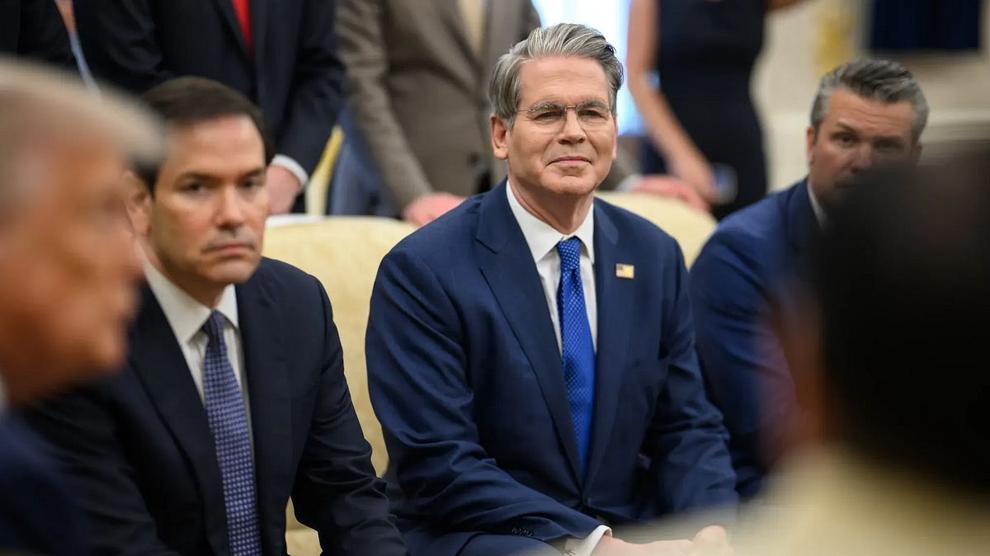
(The Center Square) – U.S. Treasury Secretary Scott Bessent said Thursday more oil could be released from the nation’s stockpiles than the 172 million barrels announced last week and that other market-based measures could soon add additional supplies to global energy markets.
The Trump administration announced last week it would release 172 million barrels from the U.S. Strategic Petroleum Reserve over 120 days beginning Monday, joining 30 other nations who have agreed to add a total of about 400 million barrels from their emergency oil reserves in an effort coordinated by the International Energy Agency.
Bessent said in a network interview on Thursday that the Trump administration is considering removing sanctions on Iranian “floating” oil totaling 130 million to 140 million barrels that is now without customers.
“We unsanctioned Russian oil,” said the Treasury secretary. “We knew that there were about 130 million barrels on the water, and we created supply that is beyond the Strait of Hormuz.”
About 130 million barrels of Iranian oil could also be unsanctioned, he said.
“In essence, we will be using the Iranian barrels against the Iranians to keep the price down for the next 10 or 14 days as we continue this campaign,” said Bessent.
“The U.S. could unilaterally do another SPR release to keep the price down,” Bessent added.
The Strait of Hormuz, about 24 nautical miles wide at its narrowest point, has been mostly closed since the U.S.-Israeli bombing campaign began, preventing about one-fifth of world oil supplies from reaching global markets. Iran has allowed Iranian- and Chinese-flagged oil tankers to transit the strait in recent days.
After Israel’s attacks on Kharg Island in the Strait on Wednesday, Iran responded Thursday with missile and drone strikes on oil and gas production and export facilities in neighboring countries around the Persian Gulf, taking supplies off global markets for months and years.
Iran’s strike Thursday on the world’s largest LNG export facility in Qatar caused damage that could take five years to repair, according to the Gulf nation’s energy ministry.
Bessent provided no specifics on any additional drawdowns on the U.S. Strategic Petroleum Reserve, which now contains 415 million barrels, less than 60% of its capacity. President Donald Trump vowed on the first day of his second term to fill the SPR, but Congress has not voted to provide funding.
The 172-million-barrel draw down on U.S. strategic oil reserves will be done using swaps, which call for companies receiving barrels to return them to the national stockpile with a premium later, usually after about 10 months, explained Ed Hirs, an energy economist at the University of Houston.
“The refiners get the barrels now but they are contractually obligated to return that oil plus a ‘premium’ of extra barrels,” said Hirs. “It’s essentially an interest-bearing loan in which the interest is paid in oil, not dollars.”
The premiums will translate to approximately 20% of the oil released to the company in the swap, he said.
The Department of Energy said in statement that the swaps will strengthen U.S. strategic oil reserves while stabilizing markets at no cost to American taxpayers.
In 2022, when President Joe Biden decided to release 180 million barrels from the reserve during the early days of the Russia-Ukraine war, the barrels were sold to U.S. oil refiners, not swapped and replaced later.
The four Strategic Petroleum Reserve storage sites in underground salt domes in Texas and Louisiana are connected by government-owned and commercial pipelines to 24 refineries along the Gulf Coast and six refineries in Michigan, Ohio and Kentucky.
Once the refineries along the Gulf Coast turn the oil reserves into gasoline, it moves via the Colonial Pipeline to the Northeast and on the PPL Pipeline to the Midwest, with prices at the pump typically responding with a two- to three-week lag as the fuel reaches drivers farther and farther away from the salt domes.