
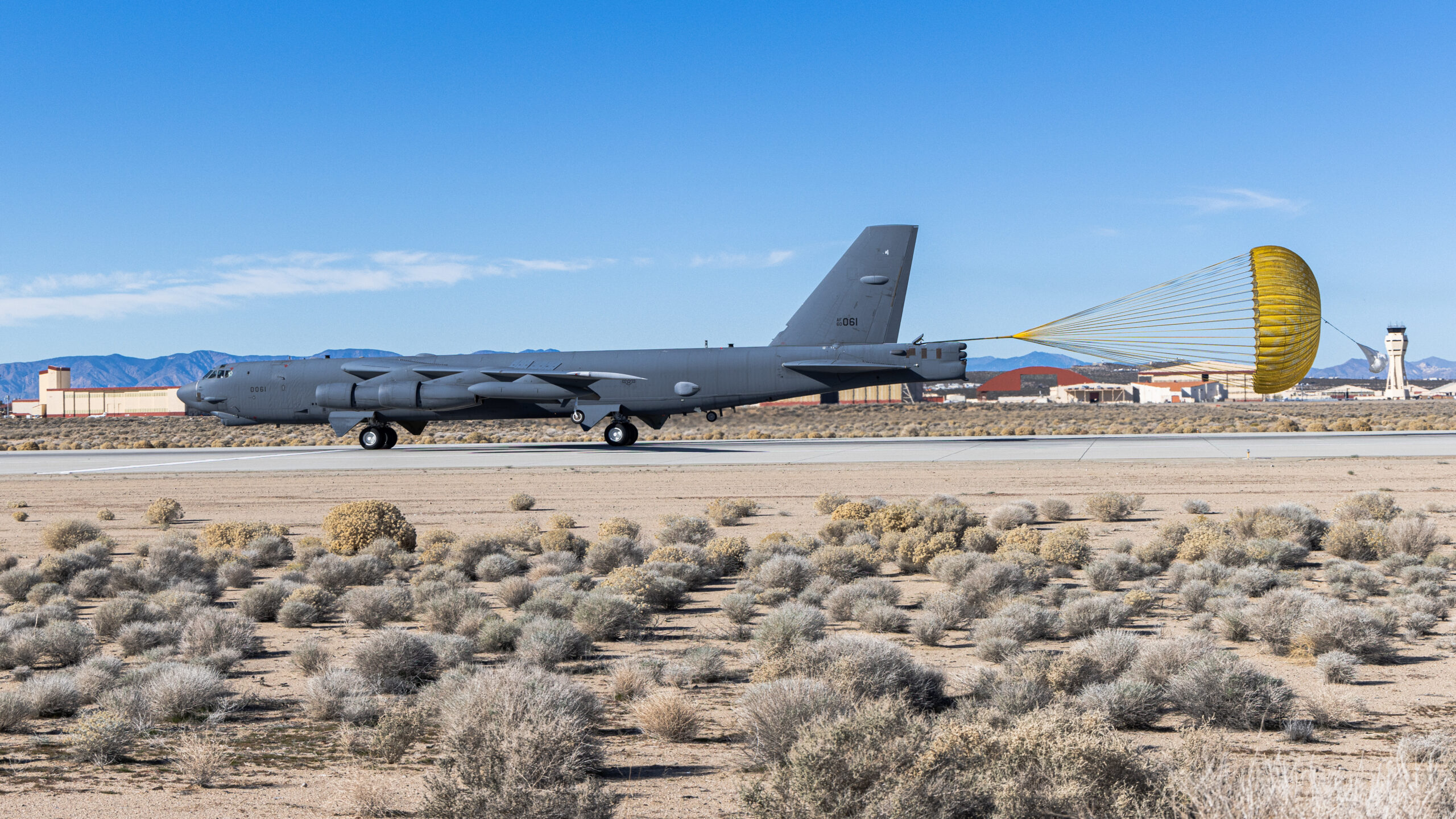
ARLINGTON, Va. — A B-52 Stratofortress has completed a ferry flight from Boeing’s facility in San Antonio to Edwards Air Force Base in California after receiving a new radar system under the Air Force’s B-52 Radar Modernization Program, the service said.
The aircraft was flown Dec. 8 by a combined crew from the 49th Test and Evaluation Squadron at Barksdale Air Force Base, Louisiana, and the 419th Flight Test Squadron at Edwards. The bomber will undergo ground and flight testing through 2026 to support a production decision expected later in the year.
The upgrade replaces the B-52’s legacy radar with a modern Active Electronically Scanned Array system, designed to improve all-weather navigation and targeting while addressing reliability issues associated with the aging equipment. The radar was developed by Raytheon Technologies and integrated into the aircraft by Boeing.
“The ferry flight of this upgraded B-52 marks an important moment in our efforts to modernize the bomber force,” Secretary of the Air Force Troy Meink said. “This radar modernization ensures that the B-52 will continue to serve as a cornerstone of American airpower well into the future.”
The radar modernization effort is part of a broader series of upgrades intended to extend the service life of the B-52 fleet through at least 2050. The Air Force plans to operate 76 B-52 aircraft as a complement to the B-21 Raider, its next-generation strategic bomber.
In addition to the new radar, the B-52 fleet is scheduled to receive new engines, updated crew compartments, upgraded avionics, improved conventional and nuclear communications systems, and other enhancements intended to support both conventional and nuclear missions.
“This milestone ensures our future Airmen inherit a modernized, ready Air Force,” Air Force Chief of Staff Gen. Ken Wilsbach said. “The B-52 Radar Modernization Program is about more than technology, it’s about readiness, deterrence and the ability to fight and win.”
The Air Force said the successful ferry flight underscores its commitment to sustaining the B-52 as a long-range strike platform despite the aircraft’s more than six decades of service.