
There are some stories you wish you never had to write about.
The tragedy that unfolded in Shreveport this past weekend is one of those moments. Eight young lives lost. Families forever changed. A community shaken to its core.
It is hard to process something like this. It is even harder to explain it.
What makes it even more difficult is how close it hits to home. Shreveport is not some distant place we read about in headlines. It is part of our region. It is part of our daily lives. Many of us have family, friends, and connections there. When something like this happens, it reminds us that these kinds of tragedies are not limited to “somewhere else.” They can happen anywhere.
They can happen here.
In moments like this, the first response for many of us is prayer. And that is appropriate. We should be lifting up the families who are grieving, the survivors who are recovering, and the first responders who had to walk into an unthinkable situation. Prayer is not a last resort. It is a first response.
But we also know that prayer alone cannot be where the conversation ends.
Events like this force us to confront difficult realities. There are underlying issues at play in tragedies like this. Mental health, family dynamics, access to resources, community support systems, and many other factors all intersect in ways that are not always easy to understand.
In the hours and days following events like this, there is often a rush to assign blame. People take to social media, television news, and conversations with strong opinions about what caused it and what should be done. Those voices are often loud and immediate.
But lasting solutions rarely come from the loudest voices.
They come from thoughtful discussion, careful analysis, and a willingness to listen as much as we speak. They come from cooler heads who are willing to step back, look at the full picture, and work toward meaningful change.
That kind of work is not easy. It requires patience. It requires collaboration. It requires people from different perspectives coming together with a shared goal of preventing future tragedies.
It also starts at the local level.
We have to look out for one another. We have to be aware of the people around us. We have to be willing to check in on friends, neighbors, and family members who may be struggling. Sometimes the signs are subtle. Sometimes they are missed. But a connected community has a better chance of recognizing when something is not right.
There are no simple answers to something this complex. But that does not mean there are no answers at all.
As a community, we can choose how we respond. We can choose compassion over division. We can choose thoughtful action over reactive noise. We can choose to work together rather than retreat into our own corners.
Our thoughts and prayers remain with the families in Shreveport. Their loss is unimaginable.
And as we grieve with them, may we also commit ourselves to being part of the solution, whatever that may look like, for the sake of our communities and our future.
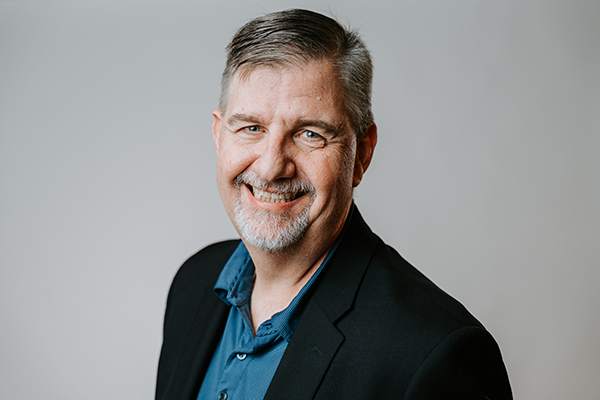
David Specht is president of Specht Newspapers, Inc., publisher of the Minden Press-Herald, Bossier Press-Tribune, and BIZ Magazine.