
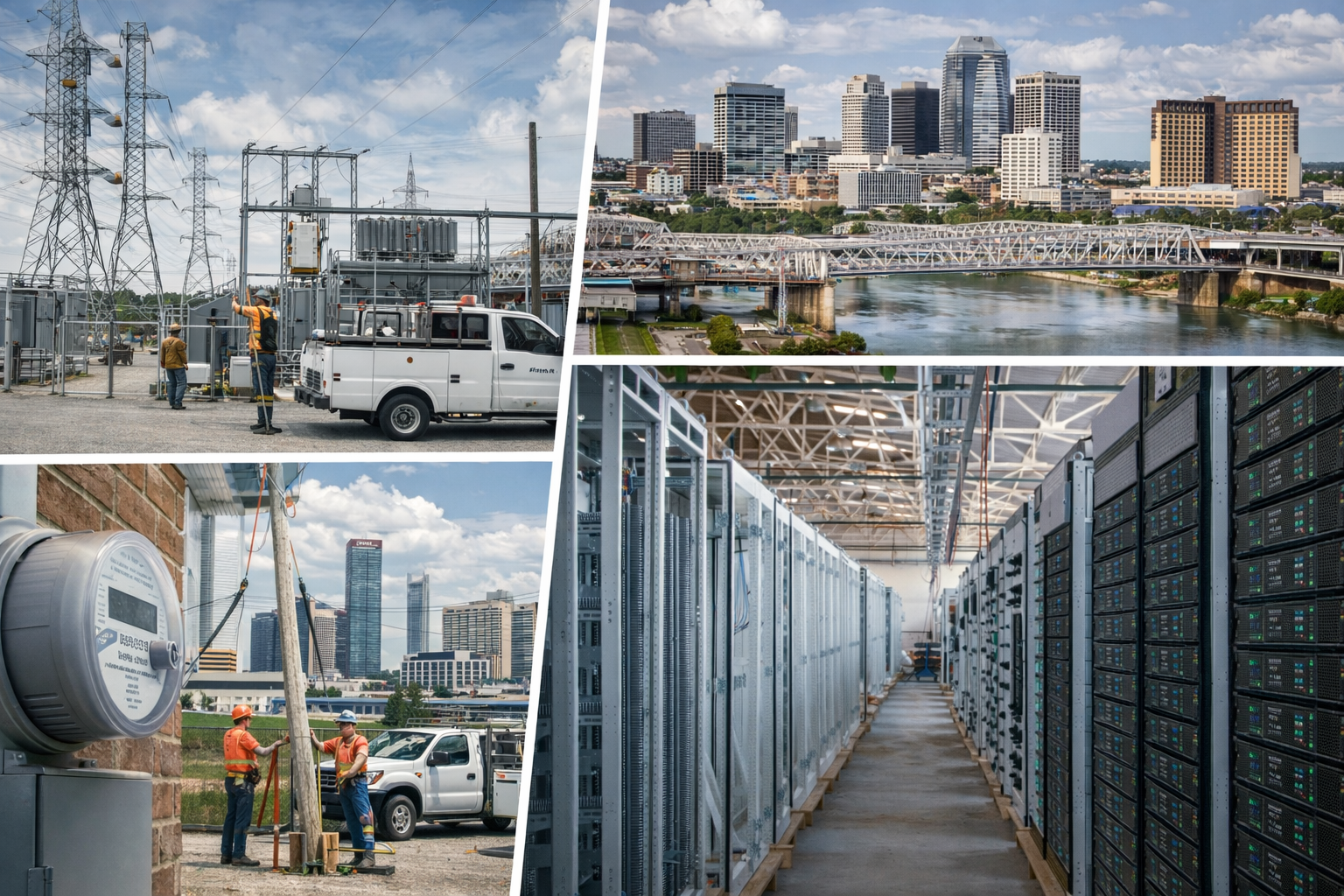
A $12 billion investment by Amazon to build interconnected data center campuses in Caddo and Bossier parishes is being described by state and regional leaders as the most significant economic development project in north Louisiana in decades, reshaping the region’s industrial profile and placing it squarely in the nation’s expanding artificial intelligence infrastructure race.
According to multiple press releases and published reports , the project will establish Amazon’s first data center campuses in north Louisiana and represents a coordinated, multi-site development designed to support cloud computing and AI workloads through Amazon Web Services.
The investment is expected to create 540 direct on-site jobs with wages at or above 150 percent of the statewide average, along with an estimated 1,700 indirect jobs across the northwest region, according to Louisiana Economic Development. Construction activity is projected to support up to 1,500 jobs, according to STACK Infrastructure, which will develop and own the campuses.
Gov. Jeff Landry said the announcement reflects a broader strategy of aligning regulatory policy, tax incentives and workforce development efforts to attract large-scale capital investment. According to statements made at the announcement event, the state has secured nearly $90 billion in capital investment since Landry took office, including more than $61 billion in 2025 alone.
“This is not going to cost the people of Louisiana,” Landry said, according to published coverage of the event.
Utility Infrastructure and Cost Allocation
A central issue surrounding large-scale data center development nationally has been the impact on electric rates and grid reliability. In Louisiana, state officials and utility executives moved quickly to address those concerns.
According to Southwestern Electric Power Co., known as SWEPCO, Amazon will cover 100 percent of costs associated with new substations, transmission lines and other system upgrades required to serve the data centers. The utility said those costs will not be passed on to existing residential or small-business customers and will remain subject to oversight by the Louisiana Public Service Commission.
“Amazon will pay 100% of its own electricity cost, including all facilities and system upgrades,” SWEPCO President and Chief Operating Officer Brett Mattison said, according to press materials.
SWEPCO said the infrastructure investments required for the project will strengthen the regional grid and enhance reliability for all customers. Since 2025, the utility has inspected more than 80,000 utility poles, replaced more than 18,000 poles and trimmed nearly 1,300 line miles of trees as part of ongoing grid modernization efforts, according to company statements.
Reliable and resilient energy infrastructure is a key factor in corporate site selection decisions, Mattison said, describing the Amazon project as a “once-in-a-generation technology and energy transformation.”
Multi-Parish Campus Design
The development will span interconnected campuses across Caddo and Bossier parishes, a structure intended to support continuous service and operational redundancy.
According to Amazon’s Chief Global Affairs and Legal Officer David Zapolsky, the $12 billion investment will build next-generation campuses to support AI and cloud computing workloads while generating hundreds of high-paying jobs and substantial infrastructure investment.
The project is expected to generate significant new local tax revenue to support public services, schools and infrastructure improvements in surrounding communities, according to regional development officials.
Justyn Dixon, president and CEO of the North Louisiana Economic Partnership, said the project reflects coordinated collaboration among state, parish and municipal leaders.
Local officials including Shreveport Mayor Tom Arceneaux and Bossier Parish Police Jury President Tom Salzer described the investment as transformative for the region’s economic base, citing anticipated job creation, tax growth and expansion of the area’s emerging cyber and technology corridor.
Water Use and Environmental Scrutiny
Data center developments nationwide have drawn scrutiny over water consumption and electricity demand. In northwest Louisiana, local officials raised questions about potential impacts to Caddo Lake and public water systems prior to the formal announcement.
Roger Wehner, Amazon vice president of economic development, said the company’s cooling systems will use water less than 13 percent of the year, primarily during the hottest periods, and rely on outside air the remainder of the time, according to event remarks and published coverage. He also said the facilities are designed to be significantly more water efficient than the industry average.
According to reporting, Amazon has committed to invest $400 million in public water systems in the Caddo-Bossier area. State officials emphasized that infrastructure upgrades associated with the project would be funded by the company rather than ratepayers.
The project comes as other Louisiana jurisdictions weigh restrictions on data center development. The New Orleans City Council recently approved a one-year moratorium on data centers, citing zoning and infrastructure concerns, according to published accounts.
Incentives and Workforce Development
To secure the investment, Louisiana offered Amazon a competitive incentives package that includes workforce development support through LED FastStart, according to state officials. The company is also expected to participate in the state’s High Impact Jobs and Data Center Sales Tax Exemption programs.
From 2010 to 2024, Amazon invested more than $4.7 billion in Louisiana across fulfillment centers, sortation facilities, delivery stations and renewable energy projects, according to company data. The new campuses expand that footprint into large-scale AI and cloud infrastructure.
Construction is expected to begin imminently, with operations launching in phases over several years.
— BIZ Magazine.