
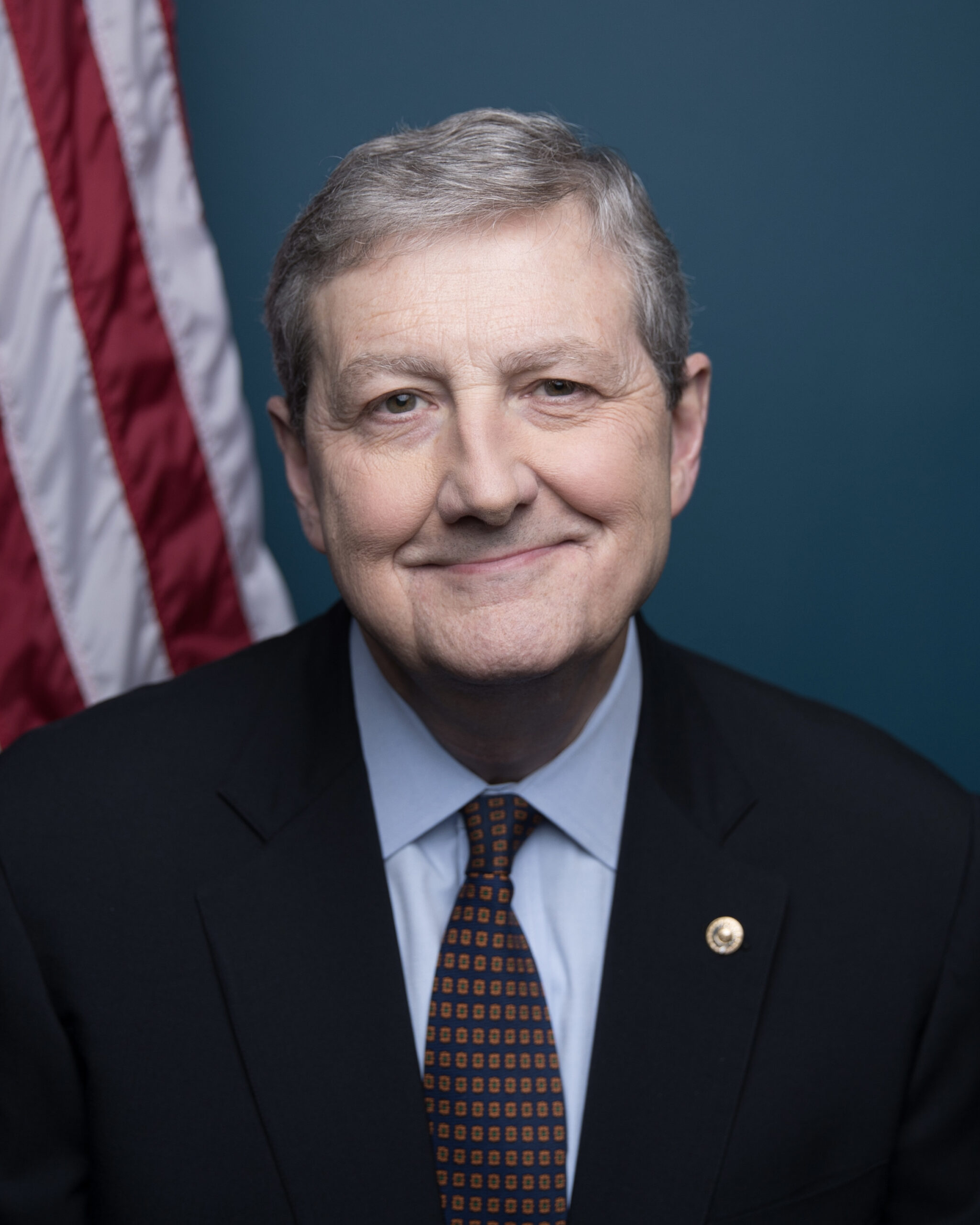
WASHINGTON — John Kennedy and Ted Budd, joined by Andy Kim and Angela Alsobrooks, have introduced bipartisan legislation aimed at easing regulatory requirements for community banks by updating an asset threshold that has not kept pace with inflation.
The Tailored Regulatory Updates for Supervisory Testing Act, known as the TRUST Act, would raise the asset threshold for certain full-scope, on-site bank examinations from $3 billion to $6 billion. Under current law, banks with more than $3 billion in assets are subject to examinations every 12 months, while smaller institutions may qualify for an 18-month examination cycle.
Supporters of the bill say the existing threshold imposes an unnecessary regulatory burden on smaller, well-managed banks and does not reflect inflation, consolidation in the banking industry or modern risk management practices.
“Because Washington rules haven’t kept up with inflation, many community banks are tied up in unnecessarily frequent examinations. That isn’t right. Our TRUST Act would update the law to free many community banks from a pointlessly high regulatory burden and let the government use taxpayer money more efficiently,” Kennedy said.
Budd said the current regulatory threshold “has failed to keep up with inflation, industry consolidation, and modern risk management practices,” adding that increasing the statutory 18-month exam cycle asset threshold would allow low-risk institutions to focus on lending to small businesses and offering mortgages and private loans.
Kim pointed to the role of community banks in rural and underserved areas, saying they are “a game changer” in supporting local economic development and small businesses, particularly in regions facing bank branch shortages.
Alsobrooks said the legislation would maintain rigorous oversight while modernizing the examination process, enabling well-managed institutions to grow responsibly and continue investing in their communities.
Companion legislation was introduced in the U.S. House of Representatives by Tim Moore and Ritchie Torres. The House version passed the House Financial Services Committee in a 48-0 vote.
Moore said local financial institutions should not be subject to regulations designed for large banking corporations, while Torres described the measure as a bipartisan update that would allow regulators to focus attention on higher-risk institutions without compromising safety and soundness.
The bill has received support from the American Bankers Association, Independent Community Bankers of America and the American Fintech Council.