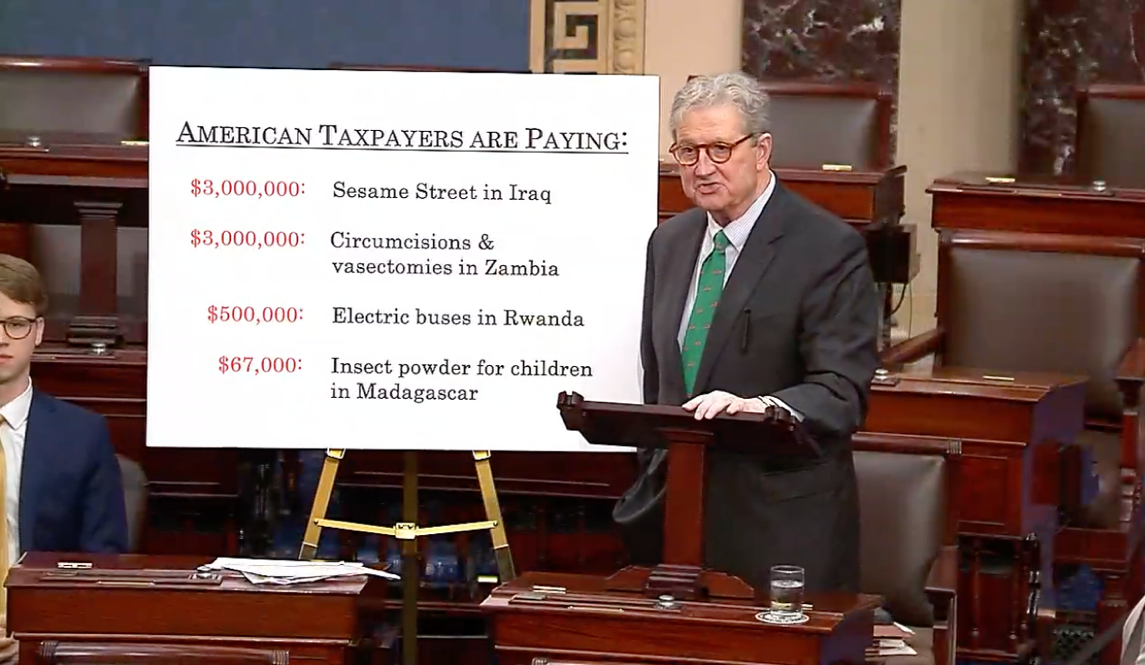
WASHINGTON – Sens. John Kennedy (R-La.) and Andy Kim (D-N.J.) have reintroduced the Close the Shadow Banking Loophole Act, a bipartisan proposal aimed at ensuring that companies operating like banks are subject to the same federal oversight as traditional financial institutions.
The measure would require companies that own or control industrial loan companies (ILCs) to face consolidated supervision by the Federal Reserve under the Bank Holding Company Act, closing a regulatory gap that allows certain non-bank firms to offer banking services without equivalent scrutiny.
“When a company looks like a bank, acts like a bank, and talks like a bank, Congress should treat it like a bank—but a loophole in federal law still lets some companies offer banking services without the same rigorous supervision,” Kennedy said. “Our bipartisan Close the Shadow Banking Loophole Act would fix that gap and help keep Americans’ hard-earned money—and our financial system—safe.”
Kim added, “If you get to act like a bank, you need to follow the same rules as banks. The sooner Congress acts to apply uniform standards to all banking institutions and closes these shadow banking loopholes, the better we protect consumers and support the stability and security of our overall banking system.”
Under the bill, existing ILCs could continue to operate under current rules while the Federal Deposit Insurance Corporation (FDIC) reviews pending applications. The legislation would also prevent federal regulators from approving a change in ILC ownership unless the acquiring company is already supervised by the Federal Reserve.
ILCs, created in 1910 to provide loans to industrial workers, have evolved to allow some non-bank firms to offer financial products while avoiding bank-level regulation. Lawmakers and regulators have warned that this structure can obscure financial risks and blur the line between banking and commerce.
The proposal has received backing from several financial and consumer advocacy groups, including Americans for Financial Reform, the Bank Policy Institute, the Center for Responsible Lending, and the Independent Community Bankers of America. In a joint statement, the organizations said the bill would help restore “safeguards to the detriment of consumers and the safety of the financial system.”
Kennedy first helped introduce the legislation in December 2023.