
SHREVEPORT, La. — Researchers at LSU Health Shreveport have developed and validated an artificial intelligence tool designed to identify patients at risk for osteoporosis and poor bone quality using existing MRI scans, potentially reducing surgical complications and associated health care costs.
The study, published in the Journal of Neurosurgery: Spine, involved 1,089 patients, making it the largest investigation of its kind to date.
Developed within LSU Health Shreveport’s Department of Neurosurgery, the automated system analyzes standard lumbar spine MRI scans and generates a vertebral bone quality score. Physicians could use the information to identify patients whose bones may be too weak to support spinal implants and fusion procedures.
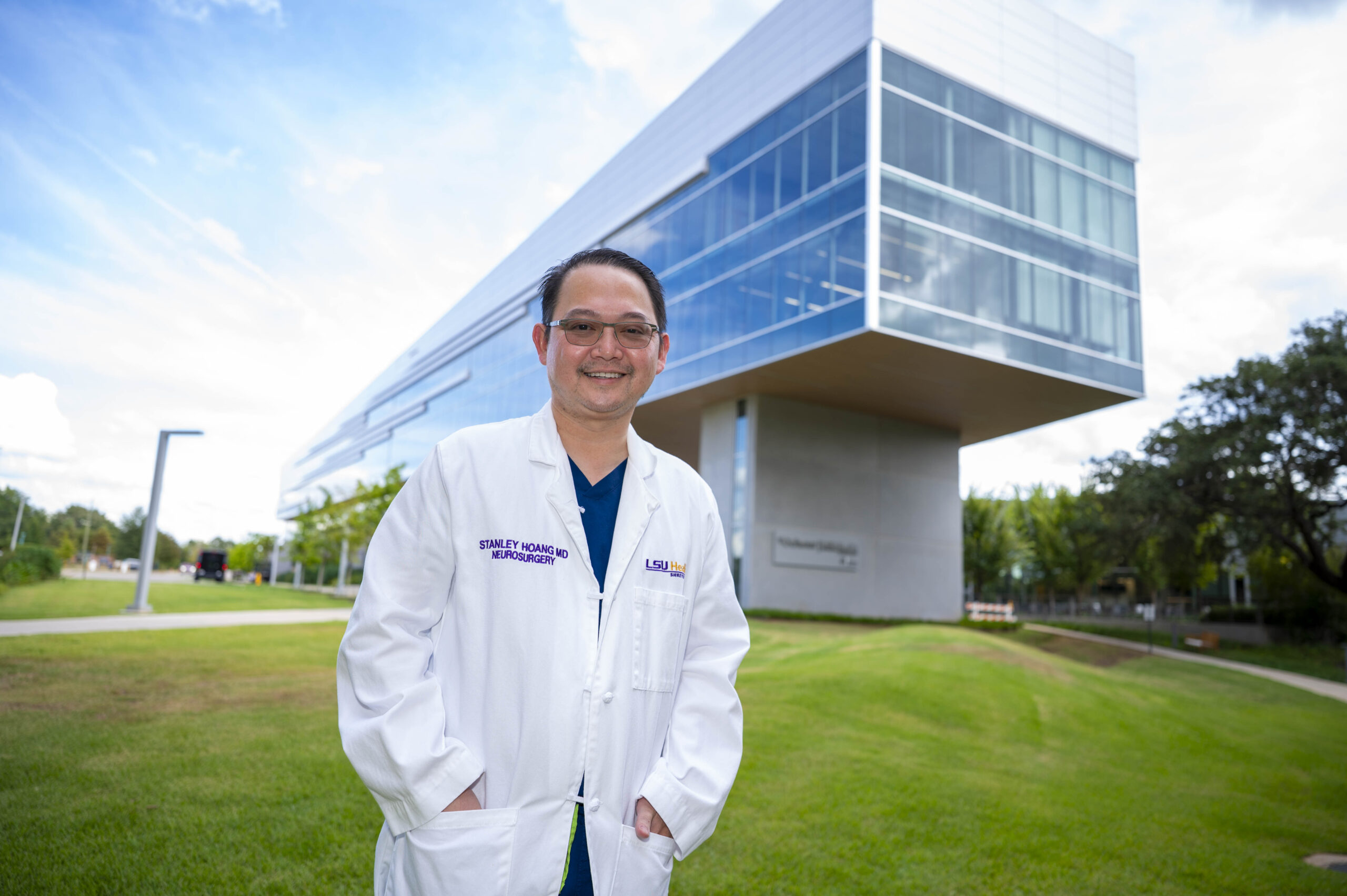
“When bone is weak, screws can loosen, implants can sink into the vertebrae, and the fusion may not heal,” said Dr. Stanley Hoang, associate professor of neurosurgery and senior author of the study. “These patients are more likely to need a second operation. Many of them do not know they have weak bones until something goes wrong.”
While bone density scans remain the standard for diagnosing osteoporosis, many patients do not undergo testing before spine surgery. The AI system uses information already available through routine imaging to identify patients who may need additional screening.
“Most spine patients already have an MRI, so this adds no extra scan, radiation or cost,” Hoang said. “If the score suggests weak bones, the team can order a bone density test and begin treatment before surgery.”
Researchers compared the automated scores with measurements performed by trained human reviewers and validated the technology against bone density scans from a separate group of patients. The results demonstrated close agreement with human assessments and an ability to identify patients with osteoporosis.
The technology could eventually be integrated into routine medical imaging workflows, automatically flagging patients who may benefit from additional evaluation.
Researchers also see potential benefits for rural communities across Louisiana, where access to specialty care and advanced diagnostic testing can be limited.
“Many patients in Louisiana, especially in rural areas, live far from specialty care and may never get a bone density scan,” Hoang said. “They often do have an MRI. This tool lets us use the imaging they already have to catch weak bones early, without another trip or another test. That can mean safer surgery and fewer repeat operations.”
The research involved a multidisciplinary team of physicians, faculty members, students, engineers and data scientists at LSU Health Shreveport.